Cooking the Books

July 6 is National Fried Chicken Day. After a few false starts—literary chickens, famous cowards—I asked a sensible person what books could possibly relate to food. I’m not sure which I value more: sensible people or books. But I can never seem to get enough of either.

To celebrate today, here are some cookbooks that are actually worth messing about with:

1. Mastering the Art of French Cooking
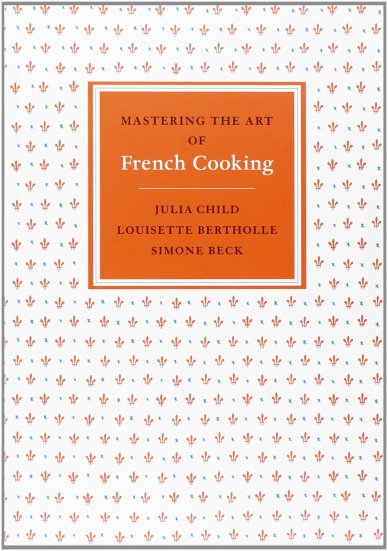
frenchcookingThis might be fish in a barrel, but should you find yourself faced with a barrel of fish, you’ll want Julia Child in your corner. I didn’t care for Julie & Julia (it wasn’t just the lobster), and the PBS series didn’t ring my bell. But Julia’s My Life in France? I fell in love with this brilliant, determined woman who would not let the snobbery of Le Cordon Bleu, the third-class status of mid-20th-century womanhood, or a six-foot pile of onions defeat her.

Plus, she was probably a spy.

So, I dug in with the two-volume set, bought an omelette pan (yes, a pan for just omelettes) and practiced tossing coffee beans on the back deck per Julia’s instructions. My neighbors moved away, but now, years later, I can entertain respectably and crank out a truly masterful Boeuf Bourguignon.

My recommendation is to proceed the same way and start with My Life in France. If you don’t have a sense of who Julia is, you might be too easily deterred to ask your butcher what a lardon is. (That is a question that practically invites insult.)

2. A Beautiful Bowl of Soup
soup

My local lunch dive has been written up in Saveur, GQ, and Bon Appetit. It is just about the best place anywhere to have a meal and you can get a patty melt and fries or the world’s best veggie burger with a side for less than five bucks.

The house is known for its range of vegetarian offerings and Mistress of the Kitchen Carla Tucker almost always has a big kettle of soup simmering. I love soup, but when I’d ask, the day’s pick might be something involving beets or some sort of squash and I’d chicken out (just too exotic for my pedestrian taste). But Carla kept trying. She’d offer a taste; I’d say no thanks. One day, while my order was on the grill, she dropped off a bowl of something unpronounceable: “Just try it.” And wow. I’m a believer.

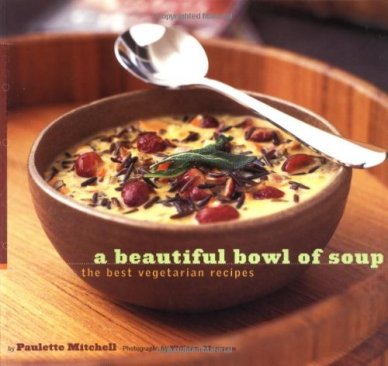
Carla recommended this book to me when I raved about her soups. You have to be brave: These recipes have combinations you might never have tried, but they make a winter’s day something to look forward to. And, while I’m not vegetarian, I appreciate all the more a dish that can satisfy my appetite with the sort of ingredients I might otherwise classify as garnish.

3. Moosewood Cooks at Home
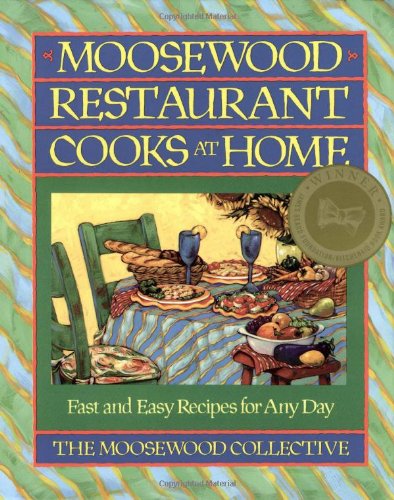
moosewoodAgain, not a vegetarian. Also not a Communist (check out the author on this one). But this edition of Moosewood is a beautiful pile of gorgeousness with one recipe that alone made the purchase worthwhile: the unimaginatively named Curried Vegetables with Dahl. In my house we call it “Roald Dahl,” because it takes less time to say. And, well, because obviously.

If, like me, you have one large pot and one dull knife, the chopping for this dish can take an actual hour. If, like me, you persist in making this dish weekly for years and never buy yourself a proper knife, shame on you! You’re going to lose a finger one day, mister, and then will you be proud of your frugality?

So get a knife and try some of these recipes. The Roald Dahl is a great dish to learn how to make a good curry at home (that’s about $1000 worth of carryout expense saved all by itself), and it forces you to keep things like fresh ginger about the house. Let me tread some dangerous ground and suggest that Roald Dahl is even better with a good dose of chicken added.

4. Better Homes and Gardens New Cook Book
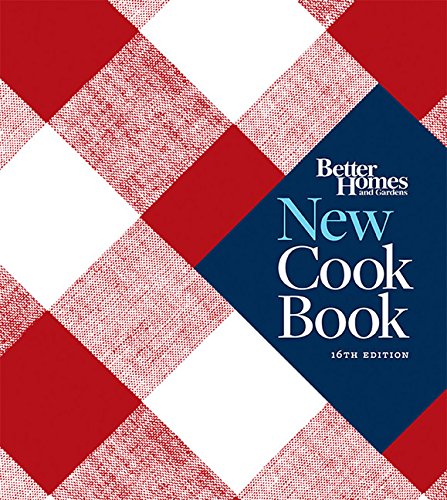
newcookMy edition of this classic is old. Really old. The stains on the cover are lard.

But that’s what I love about it. As a young mother, searching for the basics on how to roast a whole chicken, I turned to this and found it truly, frighteningly basic:

“Remove pin feathers.”

There was something about beaks and feet too. I skipped down to the part where the chicken seemed to match what I was holding. Unfortunately (for me, at least), chickens of yore did not come with their gizzards jammed into their neck cavities. So that first chicken came out of the oven packing a surprise. I had to call uncle, by which I mean Mom, who assured me that paper-wrapped giblets won’t trash your chicken (but plastic-wrapped ones will). Kitchen victory!

I’m not sure if the newer editions have made the assumption that your groceries are processed and pre-packed. If so, scan your local thrift shop for an older version. Any book of cookery will be useful, but in the event of apocalypse, you’ll want to know how to round up some satisfying grub. Even if you have to remove its pin feathers first.

Surviving in the near-wild, learning to like vegetables, having wine quite literally with your dinner—is there nothing books can’t teach us? I submit, Dear Reader, there is not.

The Principle of the Thing

July 5 is the birthday of Isaac Newton’s Principia Mathematica. I have always wanted to take a summer with the Principia and derive the calculus from first principles; however, I have not yet had a summer in which I was smart enough to do this. (My engineering calc prof had a slight accent, thus rendering my understanding of his discussion of dv/dt somewhat limited. I spent six months trying to grasp the basics of “dividity.”) If you have read the Principia, my recommendations are likely far too juvenile for you. But, if you like a fast-paced sciency read that doesn’t require the aid of your trusty TI-80, forge ahead.

1. Godel, Escher, Bach

GEBDouglas R.Hofstadter’s discussion of formal systems and the inherent flaws in self-reference (and this before the advent of the selfie) is pure magic. Even more so, perhaps predictably, is his Metamagical Themas

Hofstadter’s work combines philosophy, art, music, and math in a way that makes them all at least an order of magnitude more interesting. This book introduced me to the work of Escher (yes, it should have been a college roommate, but it didn’t work out that way), Godel (with whom I still have but a nodding acquaintance), and J.S. Bach and what a fugue is.

Ah, Bach!


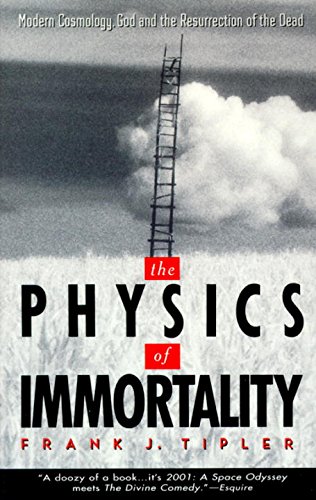
2. The Physics of Immortality

tiplerOK, stay with me. I’m not saying this guy is right. Here’s what I am saying:
  1. This guy is smart. Frank J. Tipler is a world-class cosmologist who might possibly have invented time travel. But not yet. But if so, then, clearly, already.
  2. For any respected scientist to publish a theory that posits the existence of God takes courage. It shouldn’t, because Science. But it does, because most scientists have spent a lifetime recovering from the ill effects of bad religionists and have a near-allergy to the subject.

I thought it was very thought-provoking, if a bit quite literally deus ex machina at the end. And, TBH, I did not read all the footnotes, because I simply cannot. My mathematical education stopped at pointy E and, as mentioned, dividity. If you are in the sciences, at some point someone is going to ask you about the Omega point and you’ll want to have an opinion, so take a tour and form one. And, if you have any thoughts about the Internet as Teihard’s noosphere, I’d love to hear them.

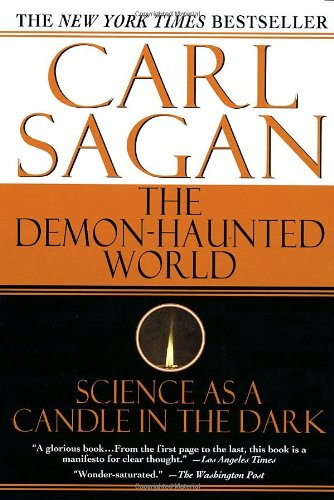
3. The Demon-Haunted World

sagan


It’s dated, yes, but expecting Carl Sagan to keep his cultural references up to date is a bit unfair. These are the broad, turtlenecked shoulders upon which the deservedly popular Neil deGrasse Tyson stands, and this is one of the best defenses of science I have read.

For people of faith, I’d suggest it is required reading. Sagan clearly shows the line between keeping an open mind as to all the things science does not yet know, and keeping a mind so open that any sort of trash can blow in. If you want to get a peek at the reason behind the just plain nastiness prevalent in some pro-science, anti-faith bestsellers, this is a good place to look.

Sagan doesn’t shriek or moan, he simply states his case for a rational approach to the world as the best chance we have of not dying as a species which, I hope, is a concept that everyone can get behind.

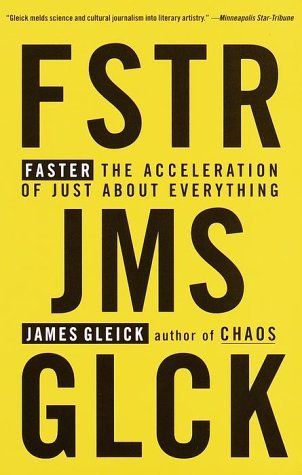
4. Faster

fasterThe first time I remember feeling “busted” by an author was while reading this book. For starters, I really did not notice that there were letters missing out of the title on the cover. I’m not saying merely that I was able to read the title without them (which apparently everyone can do), I’m saying that I did not notice their absence. It was a bit alarming when I did. Then, somewhere among the first pages, James Gleick nailed me. “Remember when microwaves were impossibly fast?” he asks. “Oh, yes. Well, faintly,” I think to myself. “Yes, it did used to take more than 90 seconds to make dinner.” “And now 90 seconds seems like a ridiculously long time, doesn’t it?” James asks, in more or less those words.
“What are you supposed to do for 90 seconds, just stand there? Or, do you sometimes, instead of pressing 90, press 88, because it’s infinitesimally faster to press the same button twice?”

Oh my actual G, James Gleick, how are you in my kitchen!?! I genuinely thought I alone had cracked the efficiency code of microwave programming. This must be what it’s like when a mentally ill person finds a doctor who can also see the invisible people. Gleick very early on found and named the illness virtually all of us have—a desperate need for everything to happen now, unless it has already happened, which it should have, because we are so very extremely busy we cannot wait for anything.

The book’s single flaw, in my opinion? It’s a really quick read.

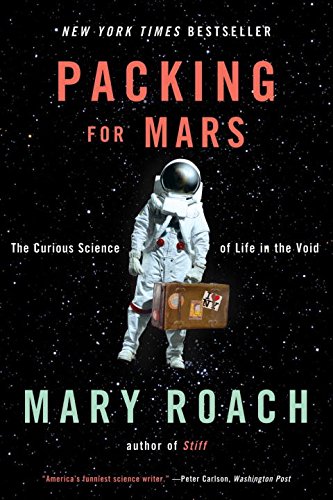
5. Packing for Mars

51XOMTe3NCL

Mary Roach was unknown to me until one author breakfast at BEA many years ago. She was on the panel along with, get this, emcee Jon Stewart, John Grisham, Cory Doctorow, and Condoleeza Rice. “Poor Mary Whats-it,” I thought. “Nobody is going to remember her.”

I packed home the ARC and started paging through. By the end of the week, I had bought and read all of her books.

Roach seems to share the same sort of serial obsessive disorder I have. You know the drill: Once you hear about something a bit interesting, you feel the need to immediately devour all knowledge on the subject. She picks some great topics—from the practical concerns of space travel in Packing for Mars, to the afterlife (how much does a soul weigh?) in Spook, to the rather bizarre way we deal with death in Stiff. More than once, I’ve seen a title of hers (Gulp, for instance) and thought: Nope, this isn’t going to be interesting at all. But, I’ll be deuced, she pulls it off every time.

Her research is meticulous. Where this would be boring in another writer, her persistence to hunt down the slightest detail invariably leads down a fascinating new avenue. With this writer, there is no road less traveled.

These are just a few thoughts to get you started. If they are not challenging enough, then I invite you to spend the day considering whether inertial frames effectively disprove the theory of gravity and, if not, whether the time-dilation effect of varying frames supports general relativity or explains why we experience time at all. Well, maybe not the whole day, but for the length of your daily constitutional. Do submit results or your thoughts on better pop-sci reads.

Celebrate America!

If you are reading this from one of the countries where the U.S. currently has troops deployed and you are not happy about it, you are exempt from this imperative. (Unless you’re one of those ISIS pilgarlics: You are exempt from nothing.)

My fellow Americans, there is more to our great land than grilled meat, low-grade explosives, and flags made in China. Please consider some great books on great people and events in our (really quite largely noble) history.

1. Hamilton

Hamilton“How does a bastard, orphan, son of a whore and a Scotsman, dropped in the middle of a forgotten spot in the Caribbean by Providence, impoverished, in squalor grow up to be a hero and a scholar?”
If you’re waiting for Broadway tickets to tell you, you’ll need a fat load of cash or a metric tonne of patience. But Ron Chernow has the scoop on Alexander Hamilton. In fact, it’s where Lin-Manuel Miranda got his info.

I’ll admit that I didn’t tap my toes during my reading, but I did look forward to every whispered turn of each deckled page. Hamilton’s impact on our republic is hard to overstate and his story is the very fabric of the American dream.

2. 1776

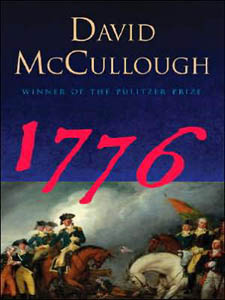
1776Big fan of David McCullough here. Pick up any of his works and you’ll get the facts and a lot more. His John Adams won the Pulitzer, but for sheer Americanness, you can’t beat 1776. He makes a persuasive case that the result of the Revolution wasn’t just inevitable, it was nearly impossibly unlikely.

McCullough dramatically describes just how much of the young republic’s future rested on the well-dressed shoulders of George Washington and and the rag-tag band of ordinary Joes who did a very extraordinary thing.


3. Revolutionary Summer

revsummer

Joseph J. Ellis has a slew of books on the nation’s founding, but none is an easier, breezier read than Revolutionary Summer. It’s hefty enough to be respectable, but you can get through this in a long, well-spent afternoon.

If you’re not already a fan of Ellis, this one is likely to send you looking for Founding Brothers and my own favorite, American Sphinx.


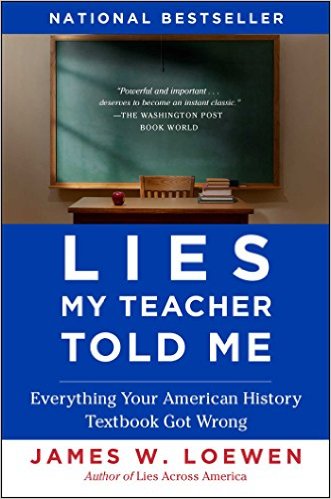
4. Lies My Teacher Told Me

liesHelen Keller’s socialism, our “unknown war” with Russia, that time we dissolved the Haitian legislature—these are just a few of the gems James W. Loewen scatters along our path as he leads us along his argument about what is wrong with history education in our schools. As a member of the publishing establishment, I’m sorry to admit, it’s us and Loewen is right.

Textbooks are not bought in the marketplace, they are adopted by school boards and these customers are more concerned with bright graphics and inoffensive content than accuracy, scholarship, or comprehensiveness. Just a taste of what gets left out of our history curriculum will leave you hungry for more.


I hope one of these books will make it into your picnic kit, along with mosquito repellent, sunblock, and the ice-cold beverage of your choice. If you end the day burnt, dehydrated, et up, and ignorant, my hands are clean. Happy Fourth!

Happy Birthday, Franz

kafkaIt’s hard to believe Franz Kafka ever had a happy birthday. Or any sort of happy day ever. Biographers describe him variously as depressed, anorexic, and occasionally suicidal, possibly with a schizoid personality disorder. He trained as a lawyer, worked in insurance, and died of tuberculosis at the age of 40. He did his writing on the side, which seems to have kept him far too busy for serial murder. Once again, we are saved by books.
If you’re finding these sunny July days just don’t comport with your personal idiom, Kafka might be just the right cloud for you. Here are a few classics to consider.

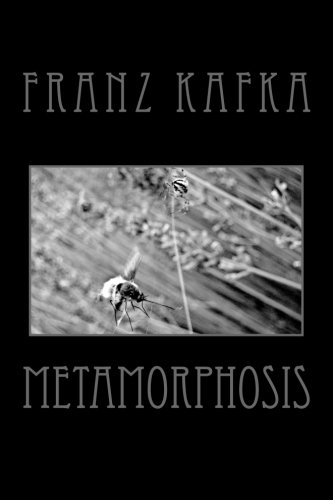
1. The Metamorphosis

metamorphosis

This packs one of the most powerful opening lines in all literature:

“As Gregor Samsa awoke one morning from uneasy dreams he found himself transformed in his bed into a gigantic insect.”

And one of its film adaptations sports the most quotable line ever:

“I’m getting better.”

—horrid fly-human creature

(Spoiler alert: He’s not getting better.)

In The Metamorphosis, Kafka explores what it means to be human in a way that leaves us suspicious that our noblest passions (a love for the violin, for example) are not qualitatively better than the joy a scaraby creature gets from mucking about in filth. Starting to see why you never married, Franz.

2. The Trial

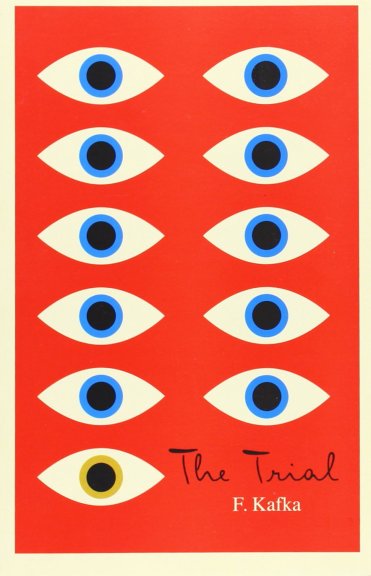
trialThis jacket of The Trial is from a truly snazzy collection, The Schocken Kafka Library. I give full marks for their terrific series design and their scholarly approach to the texts. If you’re new to Kafka, though, SKIP THE INTRODUCTIONS. They’re good, but read them last.

This romp through early 20th-century legal horror has another great opener:

“Someone must have been telling lies about Josef K., because he had done nothing wrong, but one day he was arrested.”

You have to wonder what Franz was like at a cocktail party. No idle yammering for this guy—he must have been out that day in the third grade when we all had the unit on chit-chat and social niceties. I’m imagining:

Host: “Hey, Franz, I’d like you to meet my neighbor, Jane.”

Jane: “Hello. It’s a pleasure to meet you.”

Franz: “One marvels at the presumption of those who feign pleasure when meeting someone who wants only to soil you, eat you, and bury your putrid remains in a shallow grave.”

The Trial can be read from a lot of perspectives. It is an insightful social commentary, a great example of an unsympathetic narrator, and a deft combination of bureaucracy and terror. Unless that last is oxymoronic, as may be. On a dark day, it is easy to read The Trial as a metaphor for life itself—we’re all here on earth, subject to confusing and upsetting circumstances, and very likely to be executed without ever knowing what it was all about.

If the tale itself does not fill you with dread, consider that we only have it at all because Kafka’s close friend and literary executor, Max Brod, ignored his dying wish that his unpublished works be burned. Dear Reader, I submit to you that books are better than friends.

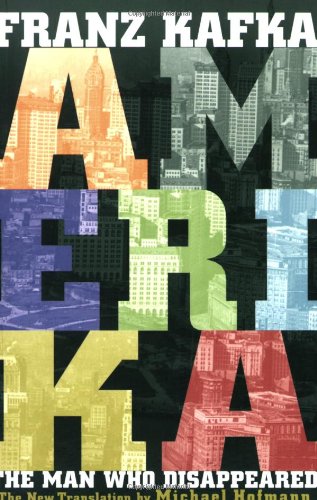
3. Amerika

amerika

There are good reasons not to recommend Amerika, but here’s why I do:

  1. Tomorrow’s July 4, and I was feeling a wee bit patriotic.
  2. It’s one of K.’s few stabs at a full-length novel.
  3. Parts of it are, ironically, not Kafkaesque.

Some people think it’s funny. It’s not— not by a long shot—but by Kafka’s standards, it’s a laugh riot. Perhaps it’s because Kafka was writing about a place he’d never been at a time when some of America’s chief exports were Keystone Cops flicks. He converts the torch in the hand of the Statue of Liberty to a sword, so he doesn’t seem to be trying to be funny. He may have just thought that the American justice system was best exemplified in the work of Mr. Fatty Arbuckle. He may have been right.

It’s a short list today, because no one should read too much Kafka at a stretch. When I was young, my mother would periodically charge into my room and march me outside to sit in the sun for ten minutes. “You’re going to be vitamin-D deficient!” she’d rail. While that was preposterous, it was also accurate; my doctor makes me take megadoses. He doesn’t know about the reading. So get outside for a minute and shake off the cobwebs, stretch out the old exoskeleton, and take a deep breath of tuberculosis-free air.

I Forgot

July 2 is “I Forgot” Day. The Internet tells me that Gaye Andersen of DeMotte, Indiana, is responsible for this assignment. Given all the things I forget, I’m not sure one day a year is enough to make up for it, but I appreciate the opportunity. Thanks, Gaye!

For today, I thought I’d invite you to remember your childhood. (No, not that horrible bit. Let’s just leave that be.) But you wouldn’t be such a voracious reader today if you didn’t stumble (perhaps quite literally) across at least one great story when you were a child. Remember the one, so loved and so dog-eared that the corners of the cover were powder soft? The one whose smell made you feel that the world was full of promise and magic? The one you couldn’t be without, but then…you forgot?

Your favorite might not be one of these, but I hope this list will spark some memories and encourage you to start a lifetime love of reading for the tiny person in your life.

1. How Joe the Bear and Sam the Mouse Got Together

joethebearI loved Joe the Bear and Sam the Mouse. Though they had a devil of a time trying to find something in common, they were determined to be friends anyway. Sort of like today’s political climate, except not.

Young readers will love the soothing watercolor illustrations, though they may grow up with an unfortunate love for brown plaid suits. At least, I did.


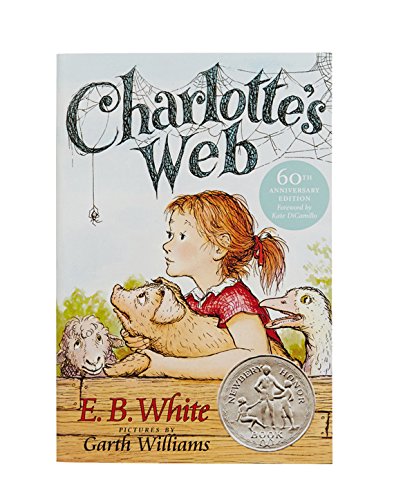
2. Charlotte’s Web

charlotte


This may have been the first time I encountered a book with more words than pictures, and I was not sure the experiment would be successful. However, E.B. White was destined to become one of my favorite writers. One has to wonder how considering the difficulty of weaving “Some Pig” led to the maxim “Omit needless words.”

The book is not without dangers, though. It taught me where bacon came from and that was a tough issue for my parents to talk their way through.

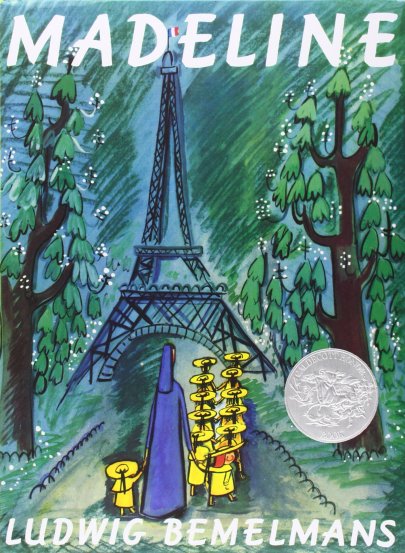
3. Madeline

madeline

Thank you, Ludwig Bemelmans, for introducing me to France, and nuns, and all-girls’ schools, all of which would someday be part of my life.

This charming story and its lovely rhymes are perfect for early readers. Bonus points for children who know what the Opera (or an opera, for that matter) is.


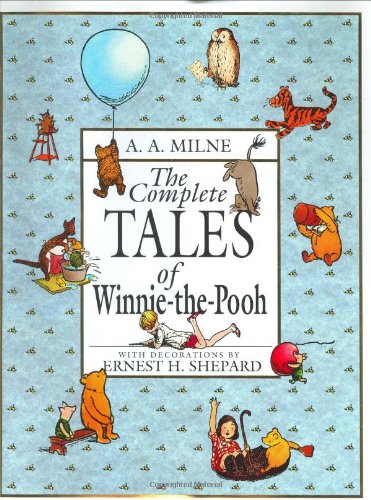
4. Winnie-the-Pooh

winnie

Who doesn’t love that silly old bear? Apparently the real-life Christopher Robin Milne, son of author A.A. Milne. The younger opined:

“It seemed to me, almost, that my father had got to where he was by climbing upon my infant shoulders, that he had filched from me my good name and had left me with nothing but the empty fame of being his son.”

Well, boo and hoo. It seems Milne had a very idealized view his son, which might be seen a plus, until you read that he walked away from Pooh and children’s books altogether partially out of “amazement and disgust” at Christopher’s appearance in adolescence. All of that is terribly sad, but the entire Milne clan has gone to their rest, where one hopes the petty squabbling has been healed, and the rest of us can happily continue to play in the Hundred Acre Wood. The victory goes to books.

5. Green Eggs and Ham

greeneggsGreen Eggs and Ham is the result of a publisher doing what publishers do best: Trick authors into writing books.

Bennett Cerf, founder and legend at Random House bet Theo Geisel $50 that he couldn’t write a book using 50 or fewer words. Geisel rose to the challenge and took Cerf’s $50. Poor Cerf had to console himself with the proceeds of selling 200 million copies of the book.

Millions of children learned to read on Seuss books and this one taught them a lesson about trying a thing before you reject it. Apologies to those who tried green ham in real life.


Those are some of the books I had forgotten. What are your childhood favorites? What lucky child is going to get it as a gift because of “I Forgot” Day? Share your thoughts and tune in next time for more great answers to “What should I read?”

The Battle of Gettysburg

They say that tragedy + time = comedy. If that’s true, we’re going to need a couple hundred more years to find anything funny about this historical event. On this anniversary of the start of the three-day struggle, I don’t mean to suggest that it’s time for party hats. It was the deadliest battle in the costliest war America ever fought (and we’ve been involved in some doozies). But if we celebrate also by commemorating or solemnizing, I think we’re doing right by those lost on both sides.

Now for the fun part: Some great Civil War–related reads:

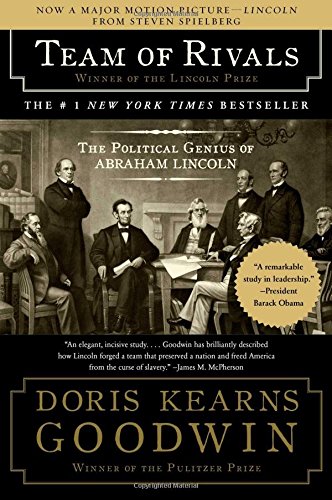
1. Team of Rivals

team of rivals

Doris Kearns Goodwin hit the (quad?)fecta with this one: Pulitzer Prize, #1 on the NYT list, a movie deal (with Spielberg, no less), and a blurb from a sitting president. Dang, girl. Not since Nixon joked, “Sock it to me” on Laugh In has someone landed such a coup.

This book is not, strictly speaking, a Civil War book, but you won’t get the Civil War if you don’t get Lincoln and this is the best way to make that happen.

Kearns’s sources are solid, her analysis trenchant, and her writing a delight. Get yourself a Goodwin.


2. Confederates in the Attic

confederates

Ever wonder why the Civil War continues to fascinate so many? Tony Horwitz digs to the bottom of the war’s continuing hold over generations of descendants of the conflict. This is a page-turner of a romp through modern-day reenactments, Klan rallies, and a pilgrimage to Appomattox (yes, dropping by Gettysburg along the way) that somehow manages to be funny.

This is a great gift for the good ol’ boy in your life.


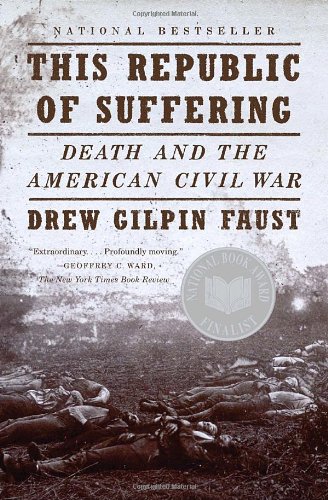
3. This Republic of Suffering

republic

Think of all the soldiers who went to Afghanistan and Iraq from 2001 to 2013. Now imagine the impact on our country if all of them had been killed. Now imagine if it had been three times as many. That’s about the equivalent death toll in percentage of Americans killed in the Civil War. Blessedly, it is hard to conceive of such a thing.

But this book does. It will make you cry. Do not try to read it in public or if you are depressed or recently bereaved. Drew Giplin Faust reminds us that our remembrance of the Civil War ought not to be about dressing up and playing soldier or watching Dukes of Hazzard or casual racism. These were real lives and too many ended too soon.


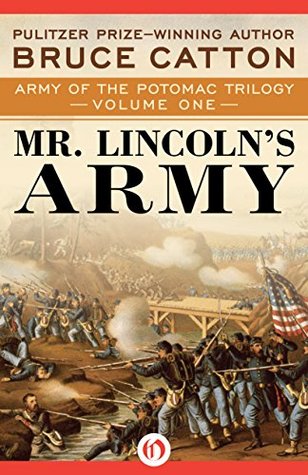
4. Army of the Potomac

army

These can be hard to find in print, but Catton’s trilogy is the must-have work on the Civil War. You can get it in Kindle or, for the Civil War buff in your life, find a well-loved hardcover set on Ebay or your local used bookstore.

One reviewer quips, “If every historian wrote like Bruce Catton, no one would read fiction.” I won’t follow him off that cliff, but I will agree that Catton spins a good yarn.


5. The State of Jones

jones

You’ll likely not have heard of Newton Knight unless you’ve read this book, and you’ll not have known about this book except for this blog (you’re welcome) and the new film starring Matthew McConaughey, The Free State of Jones. Rotten Tomatoes doesn’t have a lot of nice things to say about the film, but the book got a starred review from Publishers Weekly, so crank up the AC, make yourself some popcorn and learn about one of the most intriguing tales of the Civil War.

It seems Mr. Knight was so persuaded by the South’s claim that it had a right to secede that he led the secession of Jones County, Mississippi. He raised the Union flag over the courthouse and fought a guerilla war against the Confederacy. His belief in racial equality was apparently quite genuine, as one look at his descendants will tell you, but he had a thoroughly not modern approach to equality between men and women, as one look at his other descendants will tell you.  No one can be right about everything.

If the Civil War doesn’t fire your cannon, not to worry: We’ll be back tomorrow with more great answers to that best of questions: What should I read next?