Crime Doesn’t Pay; Neither Does Writing

Dear Reader, today we mark a solemn anniversary. On this day in 1942, William Faulkner, whose works to date (The Sound and the Fury, Light in August, Absalom, Absalom!) were not lucrative enough to keep body and soul knit together, embarked upon his screenwriting career. Yes. This happened.

Humphrey Bogart was the biggest box-office draw of the day and Warner Brothers thought the two would be unstoppable. But consider: Bogart was a chain smoker (hence, the eponymous rude habit of “bogarting” [don’t act like you don’t know what I mean]). How was he ever going to make it to the end of a Faulknerian sentence? In a phrase no one has ever used before: Hemingway to the rescue! WB put Faulkner to work doing film treatments of To Have and Have Not and then Chandler’s The Big Sleep. This was a boon for folks like me, who would otherwise never have endured Faulkner’s work in any form.

Surely, though, this was an aberration. Our society does not hold the written word in so light esteem that we’d make authors work for a living. Right? The sad truth follows:

1. Herman Melville, bank clerk
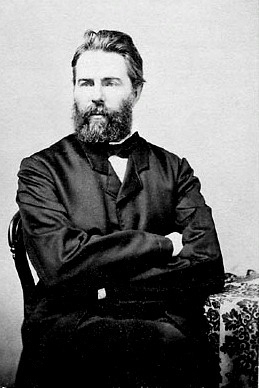
melvilleWhether he would prefer not to or no, Melville toiled at a bank in Albany, New York, beginning in 1832. Subsequent stints as English teacher and cabin boy proved equally unsatisfactory, so he boarded a merchant ship and went properly to sea. During his five-year voyage, he explored strange new worlds (including living with some cannibals in the Marquesas), sought out new life and new life forms (literally selling sea shells by the seashore in Tahiti), and was boldly imprisoned by mutineers.

Look how happy he is in this photo. Wearing a tie. Sitting in a chair. Having a table at elbow. He has landed the white whale of Indoorland. Well done, Herman.


2. George Orwell, policeman
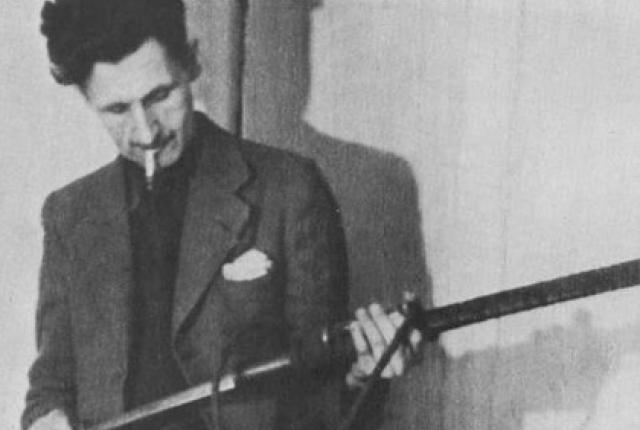
orwell

The man TIME magazine would awkwardly hail as “Big Brother’s Father” one day enlisted (yes, that’s the correct word) in the Imperial Police at the age of 19 and went off to merry Mandalay, where he would be haunted by Mister de Winter’s first wife, Rebecca, (not true) and eventually catch a nice whiff of dengue fever (sadly, true).

Known for perfectly serviceable works such as 1984, Orwell most importantly crafted the definitive guide on the making of tea, lauded (properly) as among the mainstays of civilization. He was also a linguist and spoke 9 languages, including the Tibeto-Burman tonal language, Shaw-Karen.

So cruel was life to this man that he retreated to an abandoned building in the Inner Hebrides after the death of his wife (and after many unsuccessful attempts to replace her). Fortunately, he eventually contracted tuberculosis, which was extremely fashionable at the time. Do it to Julia, indeed.

In this photo, he is doubtless wondering why he was not posted to Japan, where he might have picked up the proper technique for hara-kiri.

3. Kurt Vonnegut, car salesman

GERMANY KURT VONNEGUT

Did you really think these would get better? No Disney ads on this blog, Friend. (Dear Mr. Iger, I can make you a competitive offer.)

Kurt Vonnegut opened (not just sauntered into one Saturday morning, but opened) a Saab dealership in Barnstable, Massachusetts, five years after his first novel, Player Piano, was launched. He credited his lack of success at selling Saabs with the prejudice the Swedes displayed in withholding the Nobel.

This is a photo of Kurt visiting the air-raid shelter where he waited out the fire-bombing of Dresden as a POW, trying mightily to catch a little of Orwell’s complaint.

4. J.D. Salinger, your activities director
salinger

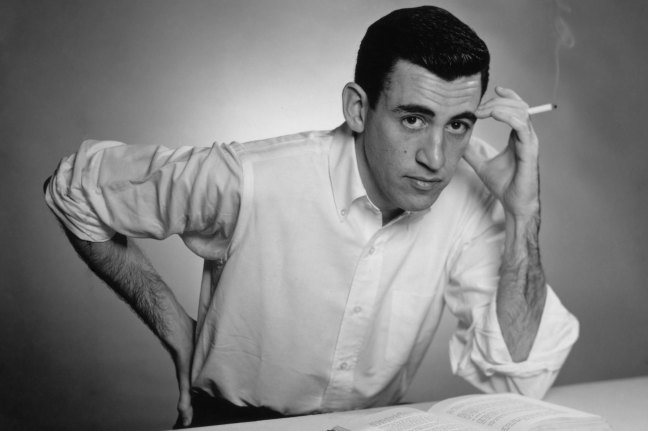
Nobody’s fool, J.D. tried to go about things the right way. But when his relationship with Oona O’Neill (daughter of Eugene O’Neill) went south, he had to get an honest job. I’m not sure he had to go whole hog and become the activities director for the MS Kungsholm, but it was a Swedish ship (seems he and Kurt were working the same angle).

Hard to imagine this fellow setting up the shuffleboard tourney. I’m seeing swaths of rye around the courts. And then, then, ohmygosh, people are just running off the edge of the ship! And no one can catch them, because J.D. has been so busy with the pinochle seatings that Holden Caulfield hasn’t been written yet. The horror!

There are more, many more: Agatha Christie as druggist’s assistant, James Joyce running a movie theater, Kerouac washing dishes and Burroughs killing bugs. Virginia Woolf may have had it worst of all. She became a publisher and it made her so cranky she rejected James Joyce. Not a date with Joyce, mind you, but Ulysses. She sold out eventually and killed herself three years later. Dangerous work, this writing life.

So, next time you breezily bypass some Great Work and think, “I’ll get it at the library,” remember: You are a party to this grave injustice. Writing is hard and writers need to eat—dust and cocaine, at a minimum. Go treat yourself, some lucky author, and the world and support your local bookstore (or massive online retailer).

The weekend’s coming. What will you read?
 

La Fête Nationale (aka Bastille Day)

Congratulations, France! You are well entitled to the high esteem in which many of the world’s denizens hold you. I always start this day with the first few lines of La Marseillaise. Then we get to the bit about letting impure blood soak our fields and the enthusiasm ebbs ever so slightly. Lest my efforts to promote your culture succeed only in insulting you (which, alas, can be too easy to do), today we will feature books about…prison.

1. Darkness at Noon

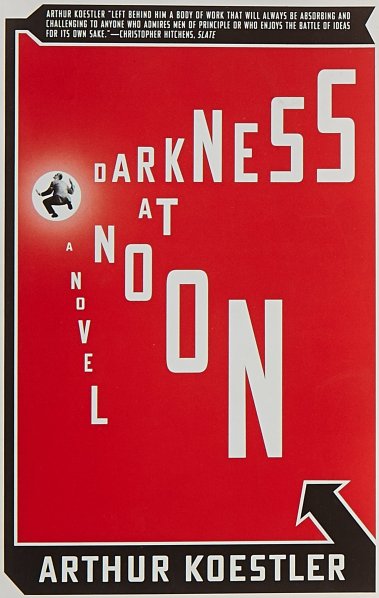
darknessDue to the haphazard way in which my childhood library was formed (i.e., books that came with the house), selections were few and disparate. I, being of few years and desperate, picked this up when I was 10 or so. Someone really ought to have been supervising me.

The exciting adventures of Rubashov are informed by Arthur Koestler‘s own experience of arrest and imprisonment under Franco. Impending death seems to impart a great clarity (though that’s a steep price), and Koestler presents this story with a gray sense of the powerlessness of the individual and the inevitability of the state’s agenda. It is not a good book for young people, nor for those condemned. It is good for the vapid or self-absorbed, and I’m sure you know someone like that. (Don’t bother, I already have a copy.)


2. One Day in the Life of Ivan Denisovich

onedayNot usually remembered with nostalgia, Aleksandr Solzhenitsyn‘s first book left two lasting impressions on my life:

  1. I named my eldest after Solzhenitsyn (the first name, not the last). I wanted him to grow up to be thoughtful, politically informed, and courageous. He did.
  2. Despite hailing from a long line of smokers, I never got the habit. You may have to spend ten years in a Siberian labor camp, thought I, and tobacco will be really hard to get and that will be the single worst part of the experience. Best not to start. Eternal gratitude, Solzhenitsyn.

These were likely not among the goals the author had in mind when setting pen to paper, but good books, I contend, have a way of creating their own good in the world. This one is great for getting out of your own skin and seeing the world from another perspective. It’s also a terrific way to put a chill on a hot summer day.

Bobby Sands reprised it, to powerful effect, during the Blanket Rebellion at Long Kesh in the ’80s. He wrote his version on toilet paper (hey, he wasn’t using it) and stored it well out of the guards’ reach. His book is just brutal. I can’t recommend you read it yourself (just to avoid damage to your soul), but it would be a thoughtful gift for that Irish Republican or Ancient Hibernian in your life. Or someone British you really dislike.

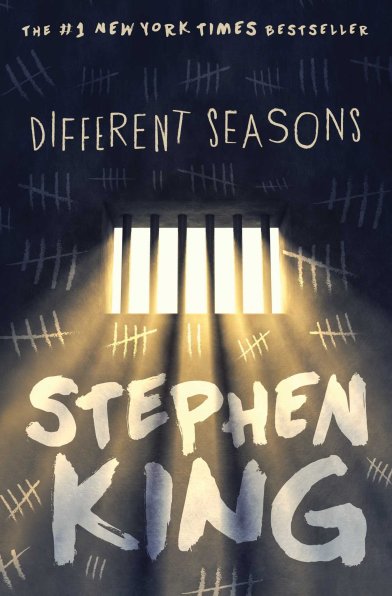
3. Different Seasons

seasons

Tucked in this Stephen King collection of three excellent short stories (and one vile tale/literary virus that should be contained and used only in the event of alien invasion) is “Rita Hayworth and the Shawshank Redemption.”

As prison stories go, this one is a charmer, featuring an unjustly convicted man who uses his talents to improve the lives of everyone in the prison and manages some fairly astonishing feats. If you need a prison story that’s short (maybe you’re just waiting to plead guilty to that speeding charge) and has a happy ending, here’s your ticket.

Do not, under any circumstances, read “Apt Pupil.” Do not. Also, make sure your basement floor is properly paved and sealed.


4. Native Son

native

This might be the best time to read Richard Wright‘s masterpiece about crime and race. It is always encouraging to see gifted writers tackling difficult subjects. It is less encouraging to recognize that, with very few revisions, this story could take place today.

I read a host of reviews before posting this and the conflict there tells its own tale. Those who like the book tend to be literary types, social activist types, and students. Those who don’t? I can’t be sure, but they seem to be some angry, privileged people.

“This book would be OK if Wright didn’t have such an agenda.”
“Maybe good for understanding a time when black people were not treated the same as white people.”
“The school board needs to rethink what students should read.”

I can agree with that last comment, both on general principles and on the basis that rape and murder are not easy to read about. But when should our children find out about crime, or inequality, or addiction, or genocide? When is someone old enough to read Night? (NB: No one is ever old enough to read Night.)

I’ll absolve you if you choose to read the abridged version and by all means feel free to skip the author’s long intro if it doesn’t work for you. But give the 250 or so pages in the middle a try. Whatever your race or politics, you’ll learn something.

For those of you who have found this just too depressing, here’s a cheery note: Today is also the birthday of British comedian David Mitchell. If you don’t know him, allow me to make an introduction: https://www.youtube.com/watch?v=-6vLp07ZePY. He has written books, too (not those books, that’s another David Mitchell), about which more in a future installment.


It’s “Cheer Up the Lonely” Day!

Caveat: Not all who are alone are lonely. So all you extroverts who somehow stumbled on a book blog, just take a deep breath before you sneak up on some “poor” loner with his nose in a book. However, if you see a forlorn face behind the pages of one of these, maybe smile and say hello.

1. The Bell Jar

belljarSylvia Plath seems like a person with a truckload of problems unless you learn something about Ted Hughes. It’s easy to point the finger at mental illness, but when both your wives opt out? There’s a dark, dark Sesame Street jingle waiting to be composed.

A person carrying this book is likely an English major. This is OK, because the life of an English major is riddled with disappointments, but he can always fall back on “At least I’m not Sylvia Plath” and feel pretty good about things.

An otherwise happy person who picks this up (due to an interest in the French intensive method, let’s say) will face one of two results: Either the book will be put down or the reader will wish he were.

Sad people, people going through breakups, people dating people named Ted, and all teenagers should avoid this book.


2. The Remains of the Day

remainsThis Ishiguro fellow is going to get a post all his own one day. He does loneliness like Phelps does water—effortless, smooth, and really fast. He wrote this one in four weeks. If you’ve seen the film, you may be thinking this is one where the book can’t possibly be better. Oh, but it is.

“I try to write unfilmable novels,” Ishiguro told the Economist. I would swear he succeeds, but there are filmmakers afoot who seem equal to the challenge.

If you don’t know the book or the film, imagine what it’s like to live a life of such structure and rigor that you never reveal your feelings, even to yourself.

Then you’re old.

Bam.


3. White Nights

whitenightsIf you ever see a non-Russian person under the age of 80 reading Dostoevsky, you should do your best to separate the two of them. I was working on a Russian minor (as in secondary course of study, not as in underaged Belarusian) when the Russian realists drew into my crosshairs. “Do your worst!” I spat at the spectre of their chill threat. I powered through Karamazov. I held firm through Karenina. Dead Souls was just a bit of bureaucratic fluff. Rounding third and heading for home, I dusted off some of Fyodor’s short stories. “The Dream of a Ridiculous Man” hurt. It hurt bad, I won’t lie. Then this. I thought our man was tackling the same project, with a gentler hand. I thought I heard the distant strains of human resilience. Was that…hope?
No. It wasn’t.

Still today, I react to every disappointment—traumatic or trivial—with this line in my head:

“My God, a whole moment of happiness! Is that too little for the whole of a man’s life?”

Extra tip for world leaders: Need to get the upper hand on Putin? Whip this line out on him. There’s no way he can stand the army of regrets that will rise to defeat him on that day. It’s his own personal Polonium-210.

4. The Dead

dead

Feeling uncontrollably chipper? Need to take that spring out of your step before you hurt your back? Is your day just too dang sunny and there are no Russians about? James Joyce to the rescue!

This, too, is a short story because it is, apparently, too easy to depress humans. Take Victorian Dublin, a snowy feast of the Epiphany, a man named Gabriel, and his wife Regretta…er, Gretta, that is. Blend thoroughly, decant into a shotglass, and then plunge the whole thing into a foamy pint of “September 1913” and you get an exploding car bomb named the Death of Romantic Ireland.

Joyce plucks your innards out so beautifully, you’ll think you hear angels singing to the airs of a harp strung with your own catgut. Yes, Furey is buried, but the snow is never very deep on the old sod, is it?


A Great Escape

I don’t know what the news is like in your corner of the world, but the headlines in my area are pretty bleak—violence, hatred, and little too much reality TV creeping into my reality. While Plan A for today was to celebrate National Chocolate Day, I’m going with Plan B: Books so engrossing that you can momentarily forget whatever is currently on your mind. I hope one of your old favorites (or, even better, a new one) is in the mix.

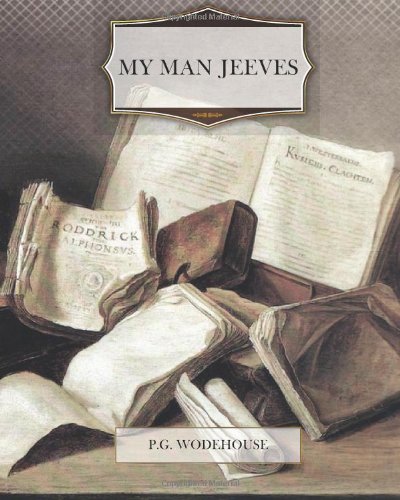
1.  My Man Jeeves

jeevesWondering how a story of a privileged dimwit and his personal gentleman can possibly be relevant to today’s world? It may not be, and that may be what I like best about it.
I thought P.G. Wodehouse would be too stiff for even my starchy taste, but when a surfeit of Audible credits, a penchant for English inflection, and a severe bout of insomnia conspired against me, I feel into the sweet trap of these delightful stories.

Wodehouse is laugh-out-loud funny and can turn a phrase so fresh that a lingering scent of salt sea air caresses your permanent smile. Even as disaster falls, which it inevitably must when a certain Bertie Wooster is about, Wodehouse discusses it with a dab hand, making you feel a sense of recognition, perhaps even nostalgia, for the perpetual shadow of impending mayhem:

“Unseen in the background, Fate was quietly slipping lead into the boxing-glove.”

Ah, P.G.! Even thoughtful enough to craft your nom de plume after the world’s best teabags.

These are books which I can heartily recommend in audio as well as print. There’s also a delightful BBC version starring a very young Stephen Fry (Jeeves, of course) and an impossibly young Hugh Laurie, available on Acorn.

2. Les Miserables

lesmis

I will stipulate that, rip-roaring as his jingles are, a certain Broadway type makes it quite difficult to see the number 9430 and not wonder what happened to 24601. C’est la vie.

This is a masterwork of a caliber that helps you understand where the word masterwork came from. It is utterly great. Leo Tolstoy described it as among the greatest—if not the greatest—work in literature. That’s a heck of a blurb even if he did not have the foresight to anticipate the work of Stephanie Meyer. (No hate here; I read them.)

Victor Hugo‘s works are not satisfied with merely describing the best of humanity; they elevate the reader. You are a better person after you read this. They ought to have prisoners read this instead of making license plates. (Although, given Valjean’s talent for avoiding capture, I can see why that idea might have been nixed.)

Personal story: When taking my vast gaggle to the library (But Mom, there’s nothing to read in our house [Criminey!]), my oldest, then in his early teens, plucked this off the shelf, walked up to my harried self and said, “Can I get this one?” “My son!” I cried, through misty eyes, spooking the browsers. He did, in fact, read it and does not currently lead a life of crime. My eternal gratitude, M. Hugo.

3. The Beekeeper’s Apprentice

beekeeper

I used to look upon genre fiction with the same sort of disdain that most American women have for my housekeeping. “Sure it’s fine for all and sundry, but I have a degree in reading. I should set my sights higher,” thought ignorant I.

Predictably, like all those who forget why they do a thing in the first place, I began to [true confesh alert] lose my passion for reading. I would dutifully plod through the “suitable” bestsellers and try to get interested in Silas Marner (I’m sorry, Mary Ann). But that flickering box in the corner was starting to catch my eye. “Maybe if I watched Dynasty, I’d be able to keep up with the office chit-chat,” thought criminally ignorant I.

Smart Friend to the rescue. (If you don’t have one, get a Smart Friend. Get as many as you can find. They are just amazingly useful and delightful ways to populate those parts of your life that cannot hold books or are not amenable to dusting.) She must have tried to sell me on Laurie R. King (and Dorothy Sayers! Yes, I thought myself too highbrow for Sayers!) a half-dozen times before I relented.

“It’s Sherlock Holmes.” (Meh. [NB: Mr. Cumberbatch was in nappies.])

“There’s a young woman.” (Whatevs. Not waving the feminist flag in my imaginary worlds.)

“She’s really smart.” (Mild interest, smart people having recently become an interest of mine.)

“She’s Jewish and she studies theology at Oxford.” (Hello.)

“In the Victorian era?”

“Yep.”

“And the writing?”

“Really good.”

Thus did my Smart Friend set me on a course of devouring the twenty or so books in the series (I have a signed copy of the latest, The Murder of Mary Russell) and, by encouraging me to read things just because they were interesting (an entirely new idea to me), may well have saved me as a reader. Eternal gratitude, Smart Friend.

Beekeeper is the first book in the series, and this is one where it’s best to go in order.

4. Still Life

still life

Another Audible discovery, this series by Louise Penny is utterly delicious. Most of the audios were voiced by the incomparable Ralph Cosham and get this listener’s highest praise.

Still Life (again, take this series in order) is the perfect cozy: Small community (you will fall in love with this town), well-crafted characters (ditto), classic detective (double ditto). It is gentle. There are pine breezes and fresh-baked croissants and homespun people who, as Canadians, are not so rural as to offend.

Penny spoke at BEA in May and she was as charming, as deep, and as human as her work. A person could cry listening to her talk about the reason she writes. A person may, in fact, have done so.

Penny is also wickedly smart and drops in plenty of wit. A favorite line comes later in the series when a woman is searching for her son who, for reasons not briefly related, is named Havoc.

“‘Havoc!’ his mother cried, letting the dogs slip out as she called into the woods.”

Yes, please. More of this. Whenever this old world starts getting you down, make a cup of tea and settle down for a braincation in Three Pines.

When you’re wondering what to read next, here’s wishing you many breaks from reality of the non-psychotic kind.

Happy Birthday, Franz

kafkaIt’s hard to believe Franz Kafka ever had a happy birthday. Or any sort of happy day ever. Biographers describe him variously as depressed, anorexic, and occasionally suicidal, possibly with a schizoid personality disorder. He trained as a lawyer, worked in insurance, and died of tuberculosis at the age of 40. He did his writing on the side, which seems to have kept him far too busy for serial murder. Once again, we are saved by books.

If you’re finding these sunny July days just don’t comport with your personal idiom, Kafka might be just the right cloud for you. Here are a few classics to consider.

1. The Metamorphosis

metamorphosis

This packs one of the most powerful opening lines in all literature:

“As Gregor Samsa awoke one morning from uneasy dreams he found himself transformed in his bed into a gigantic insect.”

And one of its film adaptations sports the most quotable line ever:

“I’m getting better.”

—horrid fly-human creature

(Spoiler alert: He’s not getting better.)

In The Metamorphosis, Kafka explores what it means to be human in a way that leaves us suspicious that our noblest passions (a love for the violin, for example) are not qualitatively better than the joy a scaraby creature gets from mucking about in filth. Starting to see why you never married, Franz.

2. The Trial

trialThis jacket of The Trial is from a truly snazzy collection, The Schocken Kafka Library. I give full marks for their terrific series design and their scholarly approach to the texts. If you’re new to Kafka, though, SKIP THE INTRODUCTIONS. They’re good, but read them last.

This romp through early 20th-century legal horror has another great opener:

“Someone must have been telling lies about Josef K., because he had done nothing wrong, but one day he was arrested.”

You have to wonder what Franz was like at a cocktail party. No idle yammering for this guy—he must have been out that day in the third grade when we all had the unit on chit-chat and social niceties. I’m imagining:

Host: “Hey, Franz, I’d like you to meet my neighbor, Jane.”

Jane: “Hello. It’s a pleasure to meet you.”

Franz: “One marvels at the presumption of those who feign pleasure when meeting someone who wants only to soil you, eat you, and bury your putrid remains in a shallow grave.”

The Trial can be read from a lot of perspectives. It is an insightful social commentary, a great example of an unsympathetic narrator, and a deft combination of bureaucracy and terror. Unless that last is oxymoronic, as may be. On a dark day, it is easy to read The Trial as a metaphor for life itself—we’re all here on earth, subject to confusing and upsetting circumstances, and very likely to be executed without ever knowing what it was all about.

If the tale itself does not fill you with dread, consider that we only have it at all because Kafka’s close friend and literary executor, Max Brod, ignored his dying wish that his unpublished works be burned. Dear Reader, I submit to you that books are better than friends.

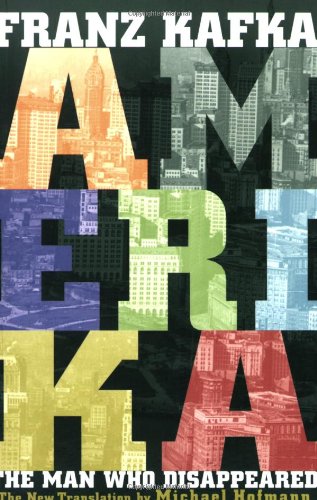
3. Amerika

amerika

There are good reasons not to recommend Amerika, but here’s why I do:

  1. Tomorrow’s July 4, and I was feeling a wee bit patriotic.
  2. It’s one of K.’s few stabs at a full-length novel.
  3. Parts of it are, ironically, not Kafkaesque.

Some people think it’s funny. It’s not— not by a long shot—but by Kafka’s standards, it’s a laugh riot. Perhaps it’s because Kafka was writing about a place he’d never been at a time when some of America’s chief exports were Keystone Cops flicks. He converts the torch in the hand of the Statue of Liberty to a sword, so he doesn’t seem to be trying to be funny. He may have just thought that the American justice system was best exemplified in the work of Mr. Fatty Arbuckle. He may have been right.

It’s a short list today, because no one should read too much Kafka at a stretch. When I was young, my mother would periodically charge into my room and march me outside to sit in the sun for ten minutes. “You’re going to be vitamin-D deficient!” she’d rail. While that was preposterous, it was also accurate; my doctor makes me take megadoses. He doesn’t know about the reading. So get outside for a minute and shake off the cobwebs, stretch out the old exoskeleton, and take a deep breath of tuberculosis-free air.

The World Is on Fire

globe on fireWell, it was. At least, the Globe was on fire, on this very day in 1613. The illustrious Bard was still among the living and had completed all but one of his plays (or all of his plays, depending on your view of the provenance of Two Noble Kinsmen).

There’s our Bill, having spent health, fortune, and toil jotting down the finest words ever strung together in English, watching the only venue where his plays could be performed go up in smoke. Sometimes I think I’m having a bad day and then I remember this. Good work will pay off, we must continue to believe, even if we’re not the ones collecting.

For Shakespeare, those collecting are publishers. (Good thing, too, because they’re not collecting on much else besides adult coloring books.) The plays have been translated into more than 100 languages, included, I kid thee not, Klingon (buy’gnop!). About ten million copies are sold yearly (as individual plays or collections), making for a tidy sum to either offset the earnings of a house’s more literary offerings or augment the fat coin rolling in for 50 Shades of GreySo, the Bard’s gifts keep giving, as he helps the book trade keep body and soul knit together.

Let’s return the favor. Dust off that copy of Midsummer (this one has pictures!) you’ve had since high school, take in a live performance, or brush up on your Shakespearean insults (if you’re going to insult someone anyway, you might as well be classy about it). Or, if you’re especially high-minded, treat yourself to the whole shebang. This tome is an all-in-one self-improvement manual, personality enhancer, and home security system.

As Bill himself would advise, “Assume a virtue if you have it not” (Hamlet, Act III, Scene 4).