Rats!

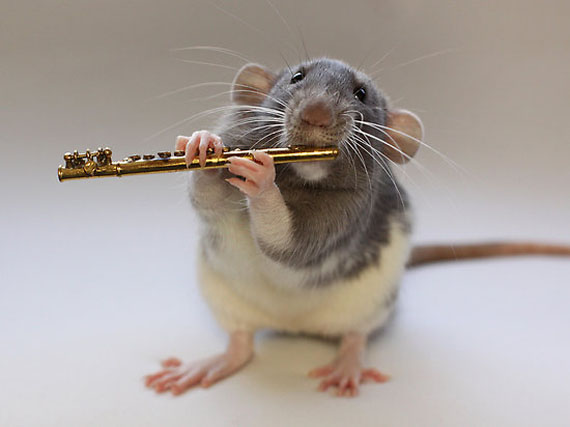
July 22nd is International Ratcatchers’ Day. I didn’t even know there were international rats. Ah! The learning never ends when books are involved. “The Pied Piper of Hamelin” is the obvious choice, but we decry the obvious. Let’s find some more reclusive rodents.

1. The Wind in the Willows
willows

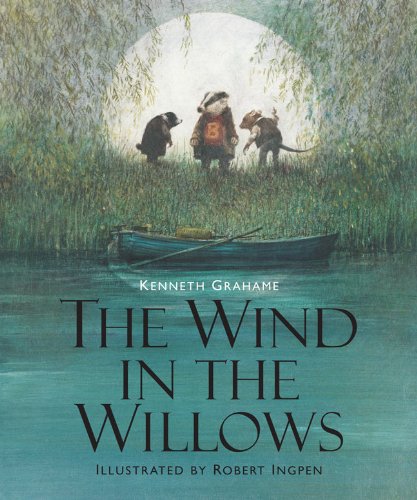
There is, apparently, no shortage of people who will argue that Rat (aka “Ratty”) is not a rat. I say to them both P and shaw.

Kenneth Grahame‘s motley crew of vermin is so wonderfully British and polite and concerned for one another that our future robot overlords will be able to recreate the best of our civilization from reading this tale.

There is a weird story surrounding the publication of the novel which asserts that it had been rejected by a number of publishers until a certain Theodore Roosevelt made a plea on the author’s behalf. I can’t find a reputable source for this and it seems wildly improbable. Yes, there was Teddy’s thing with the national parks and the Great Outdoors in general, but there were also the Rough Riders. What happened to him on San Juan Hill?

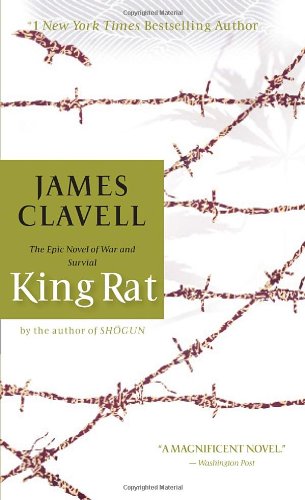
2. King Rat
kingrat

James Clavell was a POW in a Japanese camp for three years. Before his breakout hit Shogun, he debuted with this tale of survival in the camp. My father was a WWII vet of the Pacific theater and he told few tales, but one grew up with the distinct impression that few fates were worse than finding yourself at the mercy of the Japanese.

Clavell tells lots of tales. Most historical accounts paint his prison, Changi, as among the better run. The survival rate was significantly better than average; most camps had a 27% mortality rate. Some of this was due to the, let’s say pluck, of the prisoners, who caught and bred rats as livestock. Clavell tells the story of what happened when the camp was liberated and the soft-hearted detainees freed the rats from their cages, but I won’t spoil his revelation for you. I will spoil the bare facts of it though, because there is a lovely cinematic treatment of it featuring Javier Bardem teasing an oh-so-calm Daniel Craig in Skyfall.  If you’d prefer to see to the stark movie version of King Rat, it’s up on YouTube in its entirety. But Daniel Craig is not in it, so…

3. A Matter of Rats

matter ratsI have tried so many times to dig into India. The British loved it. They have all that tea. Gandhi and Mother Teresa are great. I could even learn to like the Nehru jacket. But I have failed to get into:

  • Midnight’s Children
  • The God of Small Things
  • White Tiger
  • The Inheritance of Loss
  • The Interpreter of Maladies

I think each of the authors for these books is brilliant. The writing is enchanting. But India is just so different, in ways I can’t even articulate, that it’s hard to break into their reality bubble.

The same is true of Amitava Kumar‘s portrait of a hometown. It’s a skillfully crafted biography of place (I love that sort of thing). If you like any of the authors of the above works (and you must like at least one), you will probably love this. There is one tangent I found intriguing about the East India’s use of Patna to produce the opium they were using to hornswoggle the Chinese. [Marginalia: How is capitalism still legal?] Of all my efforts to conquer India, this vehicle came closest to carrying me to victory. Really, very close. Just not quite there. But this book does have rats—truly amazing numbers of rats. Don’t take this one camping with you.

You will have noted, I hope, the restraint I have applied in resisting the easy jump to mice. Mice are virtually everywhere in literature, and I don’t mean just in my overstock shelves in the basement. I’m sure there is some sort of mouse day (when is Mickey’s birthday, anyway) and we’ll do our due diligence then. Here’s hoping all your smelled rats are metaphorical.

 

Junk Squad

Today, the rest of the world celebrates Junk Food Day (I’m not sure if there is a day when this is not celebrated, but I tangentialize). I thought of recommending all the yummy finger food you can mindlessly consume while paging through your latest, but the pitfalls were deep and many: the meltitude of bonbons, the Trumpian stains of Cheetos, the venerable leavings of cheese and crackers, and the risk of wine stains that lend too-authentic a cast to your favorite mystery.

Instead, I offer you junk as the main course: Books which are “junk” by some reasonable standard, but that I still managed to read and even (in some cases) enjoy.

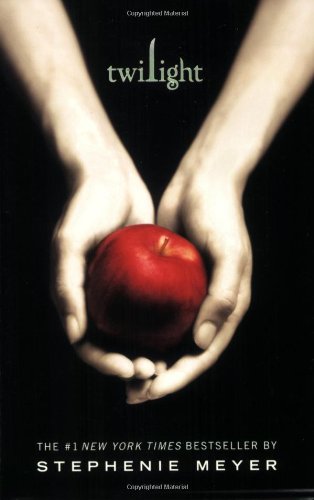
1. Twilight

twilight

Shame me if you will, but I read this. And every one of its sequels. And I watched the movies at their premier-night midnight showings. My Meyer game is strong and, if you must know, Team Edward, of course.

It started as a responsible-parenting episode. I had a teen daughter, she was obsessively reading this, yada. But what red-blooded American girl can resist the charm of an immortal, chaste Edwardian with R.Pat’s looks and a century of practicing Debussy under his belt? None, I assert.

I won’t defend the writing, and many make a strong case about how this codependent mess of a relationship is the worst possible thing for teen girls to read. But the idea that someone would wait a hundred years for you? Game, set, match Meyer.


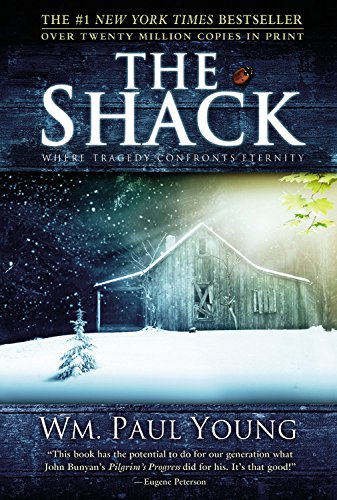
2. The Shack

shack

I can say one nice thing about this book: They nearly got the title right. In that it should start with an “SH,” have one syllable, and a short vowel, and give one a sense of purgation upon utterance.

Twenty million people bought this (No, there’s no link. I will not be a party to this.) That’s roughly the equivalent of those killed by Stalin. I’m not sure whom I pity more.

The writing contravenes the Geneva Convention, the plot is a slo-mo reel of the Hindenburg disaster, and the theology is an abomination unto the Lord.

Eugene Peterson blurbed it and, as a result, I am going to burn the one Eugene Peterson book I own (relax, it’s not the Bible).


We don’t have a rating system here at Bibliophenia, but if we did, this one would get five of these:mines

If you haven’t yet forked over your money for this one, go buy yourself six McDoubles and be the better for it.

3. Atlas Shrugged

atlas

Oh, it’s horrible. But I did read it. Twice.

Here’s the thing: If you ever feel as though you just can’t make a difference in the world, as though you have no control over your own life, as though there is no evidence of free will in your sphere of influence, Atlas Shrugged is the one and only antidote.

Have yourself a big, cold drink of Dagny Taggart. It’s like Red Bull for your soul—powerful, instantly effective, and possibly the source of long-term damage. You will be sure that your world is YOUR WORLD. You will own it. You will be all powerful. You will be an unmitigated jerk.

After about three weeks of ceaseless dominance over your life, you’ll regain your senses, recognize that other humans are not mere props in your solipsistic one-man show, and settle back down to normality. But your closets will still be super clean and your boss will have already decided to give you a raise.

[Extra credit: The “Ayn” in Ayn Rand is properly pronounced like the German word for one: Ein. Or like the first syllable in Einstein. Or like the sound you make when hit your knee on a table whilst standing up. Or that bit that Ozzy sings in the intro to “Crazy Train.” If you forget and some fanboy gives you a hard time, remind him that her real name is Alice Rosenbaum and that she’s a Russkie. That usually throws some cold water on misplaced fervor.]

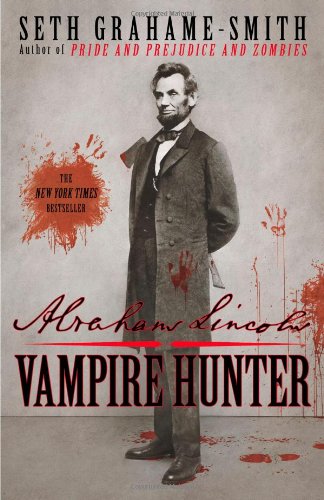
4. Abraham Lincoln, Vampire Hunter

lincolnI had a new Kindle. This was a 99-cent promo. I was on vacation. There was nothing else to read.
I loved it.

Bonus: I loved my new Kindle, because no one could see what I was reading.

This is a well-written, tightly plotted novel that explains Lincoln in a way that Doris Kearns Goodwin cannot. Here’s a wee taste:

Abraham Lincoln would never take another life. And yet he would become one of the greatest killers of the nineteenth century.

The deliciousness does not stop. Need a break? Get yourself one of these.


And that, my friends, is our tour of junk food for the mind—some of it dangerous, some OK in moderation. I hope that you will try one, especially when you are feeling rebellious, but dare not rebel against reading. What will you read next?

The Solemnity of the Night Sky

June 20 is Space Exploration Day. Since we’re (oh so sadly) in something of a post-Space Age here in the United States, we’ll have to explore it using the rocketry of literature. The title of today’s post comes courtesy of Victor Hugo. Where in Hugo, I cannot say, because the Internet is peopled with crusading anti-academics, but I salute them for having curated this quote:

It seemed to be a necessary ritual that he should prepare himself for sleep by meditating under the solemnity of the night sky… a mysterious transaction between the infinity of the soul and the infinity of the universe.

At this time in the sweltering Midwest, getting outside in the evening is a necessary ritual for even the soulless, but it is generally always a good idea. Here are a few thoughts to keep you company on your nocturnal sojourns:

1. Everyone is a moon, and has a dark side which he never shows to anybody.

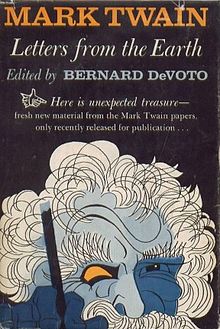
220px-LettersFromTheEarthIf you know Mark Twain, you likely know him for his folksy, gentle humor. If you stopped at Huck Finn or Tom Sawyer, this quote might seem like the darkest thing Twain has ever written. It’s not.
I invite you, with some trepidation, to take a tour of the dark side of Twain with Letters from the Earth. Following the death of his wife and daughter, Twain turned his pen against the author of his miseries, God. The result is a diatribe in the voice of Satan, fairly effectively damning adherents of all faiths, especially Christians. It is theologically dark, but also a sad reflection of the state of Twain’s mind just before his death. Apparently much of his grief was not the result of bereavement but of the inconveniences of age and infirmity, particularly as they affect the recreational habits of gentlemen. Some things are better left in the dark.

2. The contemplation of celestial things will make a man both speak and think more sublimely and magnificently when he descends to human affairs.

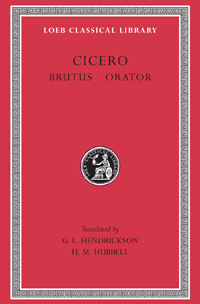
cicero

Indulge me while I relate the jubilance [here resisting the urge to insert a .wav of a giggle of delight] resulting from a recent acquisition: Some sixty volumes from the Loeb Classical Library, including this tasty bit of Cicero. Having been subjected to many years of the Latin (Ah! The perfect passive!), I can now look upon it with a joy largely absent from my first encounter. Cicero, especially, is a fondly remembered friend.

Oratory, the subject of this letter (hardly the only time Cicero treated the topic), has three aims: docere, delectare,  movere—To document your thesis, to delight your audience, and to move your listeners.

Rhetoric was once an essential staple of any proper education. Along with grammar and logic, it formed the foundation for all other knowledge. Today, the collective term for these three is a derision: trivia.

Fallen, too, from so great a height is astronomy. Once the parent of all the natural sciences, it is now a hobby for those who can afford telescopes and don’t have to be at work in the morning. With the extent of urban light pollution, we’d not know there were stars at all, were it not for Neil DeGrasse Tyson (gratuitous shout-out).

Having thus documented the importance of astronomy, delighted you with the prospect of staying up well past your bedtime, we’re on to the movement: This week, I urge you to free your inner astronomer. Grab some binoculars (yes, you can see heaven with them) and a starter guide and look up. The stars have something to say to you.

3. We ran as if to meet the moon…

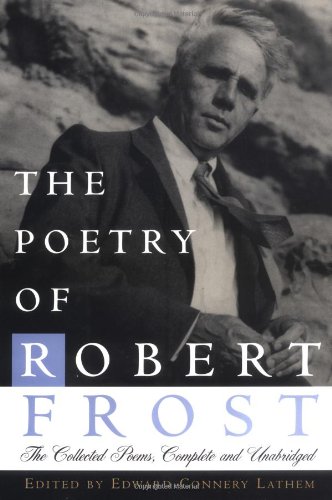
frostThere is no good reason not to have a bit of Robert Frost ready to hand. Amazon will let you pick up used copies of his work for a penny. A penny, people!

This line is from “Going for Water,” from Frost’s first collection, A Boy’s Will. It conveys the excitement of childhood, that idea that you really  could catch the moon if you just ran fast enough. Far enough. Long enough.

On one long car journey in my childhood, I stared out the back window for hours on end, watching the moon. It must have followed me for hundreds of miles, sometimes ducking behind a hill or peeking from a stand of trees. Shakespeare being still many years in my future, I felt there could be nothing in the universe more certain, more dependable than the moon.

My parents, in the front seat, were too busy with driving, navigating, and planning to turn around and look at me. But the moon—the grand, important moon—had all the time in the world. It watched me all the way home, never fading, never blinking. Robert_Frost,_1913

I found this photo of our young poet, taken in the year he first published A Boy’s Will. It’s hard to see the grizzled old Yankee we’ve come to love in this jaunty boy.

But that old man is in this young boy, just as the full moon is in the new, and the sunset in the sunrise.


I hope you’ll explore some space of your own today. If time and liberty are insufficient this evening, at least recite Goodnight, Moon on your way to dreamland. The moon and stars will still be there tomorrow, and forever from now. Happy reading!


La Fête Nationale (aka Bastille Day)

Congratulations, France! You are well entitled to the high esteem in which many of the world’s denizens hold you. I always start this day with the first few lines of La Marseillaise. Then we get to the bit about letting impure blood soak our fields and the enthusiasm ebbs ever so slightly. Lest my efforts to promote your culture succeed only in insulting you (which, alas, can be too easy to do), today we will feature books about…prison.

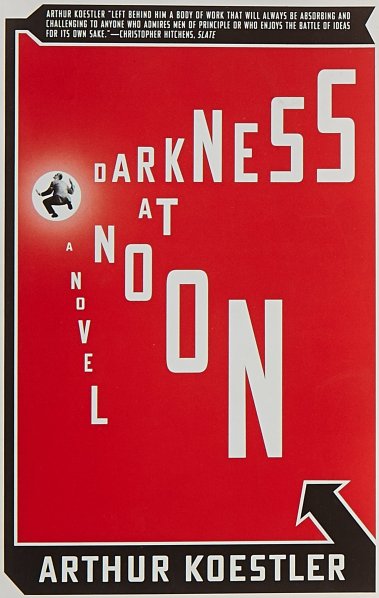
1. Darkness at Noon

darknessDue to the haphazard way in which my childhood library was formed (i.e., books that came with the house), selections were few and disparate. I, being of few years and desperate, picked this up when I was 10 or so. Someone really ought to have been supervising me.

The exciting adventures of Rubashov are informed by Arthur Koestler‘s own experience of arrest and imprisonment under Franco. Impending death seems to impart a great clarity (though that’s a steep price), and Koestler presents this story with a gray sense of the powerlessness of the individual and the inevitability of the state’s agenda. It is not a good book for young people, nor for those condemned. It is good for the vapid or self-absorbed, and I’m sure you know someone like that. (Don’t bother, I already have a copy.)


2. One Day in the Life of Ivan Denisovich

onedayNot usually remembered with nostalgia, Aleksandr Solzhenitsyn‘s first book left two lasting impressions on my life:

  1. I named my eldest after Solzhenitsyn (the first name, not the last). I wanted him to grow up to be thoughtful, politically informed, and courageous. He did.
  2. Despite hailing from a long line of smokers, I never got the habit. You may have to spend ten years in a Siberian labor camp, thought I, and tobacco will be really hard to get and that will be the single worst part of the experience. Best not to start. Eternal gratitude, Solzhenitsyn.

These were likely not among the goals the author had in mind when setting pen to paper, but good books, I contend, have a way of creating their own good in the world. This one is great for getting out of your own skin and seeing the world from another perspective. It’s also a terrific way to put a chill on a hot summer day.

Bobby Sands reprised it, to powerful effect, during the Blanket Rebellion at Long Kesh in the ’80s. He wrote his version on toilet paper (hey, he wasn’t using it) and stored it well out of the guards’ reach. His book is just brutal. I can’t recommend you read it yourself (just to avoid damage to your soul), but it would be a thoughtful gift for that Irish Republican or Ancient Hibernian in your life. Or someone British you really dislike.

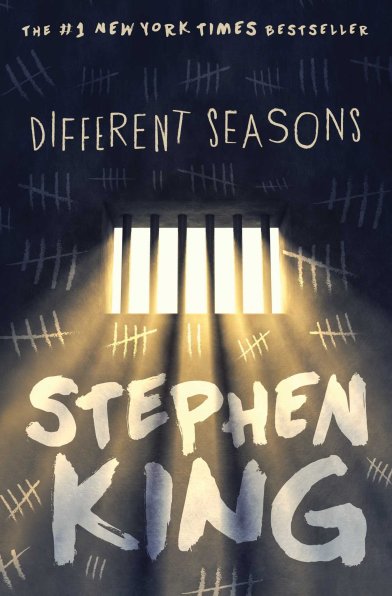
3. Different Seasons

seasons

Tucked in this Stephen King collection of three excellent short stories (and one vile tale/literary virus that should be contained and used only in the event of alien invasion) is “Rita Hayworth and the Shawshank Redemption.”

As prison stories go, this one is a charmer, featuring an unjustly convicted man who uses his talents to improve the lives of everyone in the prison and manages some fairly astonishing feats. If you need a prison story that’s short (maybe you’re just waiting to plead guilty to that speeding charge) and has a happy ending, here’s your ticket.

Do not, under any circumstances, read “Apt Pupil.” Do not. Also, make sure your basement floor is properly paved and sealed.


4. Native Son

native

This might be the best time to read Richard Wright‘s masterpiece about crime and race. It is always encouraging to see gifted writers tackling difficult subjects. It is less encouraging to recognize that, with very few revisions, this story could take place today.

I read a host of reviews before posting this and the conflict there tells its own tale. Those who like the book tend to be literary types, social activist types, and students. Those who don’t? I can’t be sure, but they seem to be some angry, privileged people.

“This book would be OK if Wright didn’t have such an agenda.”
“Maybe good for understanding a time when black people were not treated the same as white people.”
“The school board needs to rethink what students should read.”

I can agree with that last comment, both on general principles and on the basis that rape and murder are not easy to read about. But when should our children find out about crime, or inequality, or addiction, or genocide? When is someone old enough to read Night? (NB: No one is ever old enough to read Night.)

I’ll absolve you if you choose to read the abridged version and by all means feel free to skip the author’s long intro if it doesn’t work for you. But give the 250 or so pages in the middle a try. Whatever your race or politics, you’ll learn something.

For those of you who have found this just too depressing, here’s a cheery note: Today is also the birthday of British comedian David Mitchell. If you don’t know him, allow me to make an introduction: https://www.youtube.com/watch?v=-6vLp07ZePY. He has written books, too (not those books, that’s another David Mitchell), about which more in a future installment.


It’s “Cheer Up the Lonely” Day!

Caveat: Not all who are alone are lonely. So all you extroverts who somehow stumbled on a book blog, just take a deep breath before you sneak up on some “poor” loner with his nose in a book. However, if you see a forlorn face behind the pages of one of these, maybe smile and say hello.

1. The Bell Jar

belljarSylvia Plath seems like a person with a truckload of problems unless you learn something about Ted Hughes. It’s easy to point the finger at mental illness, but when both your wives opt out? There’s a dark, dark Sesame Street jingle waiting to be composed.

A person carrying this book is likely an English major. This is OK, because the life of an English major is riddled with disappointments, but he can always fall back on “At least I’m not Sylvia Plath” and feel pretty good about things.

An otherwise happy person who picks this up (due to an interest in the French intensive method, let’s say) will face one of two results: Either the book will be put down or the reader will wish he were.

Sad people, people going through breakups, people dating people named Ted, and all teenagers should avoid this book.


2. The Remains of the Day

remainsThis Ishiguro fellow is going to get a post all his own one day. He does loneliness like Phelps does water—effortless, smooth, and really fast. He wrote this one in four weeks. If you’ve seen the film, you may be thinking this is one where the book can’t possibly be better. Oh, but it is.

“I try to write unfilmable novels,” Ishiguro told the Economist. I would swear he succeeds, but there are filmmakers afoot who seem equal to the challenge.

If you don’t know the book or the film, imagine what it’s like to live a life of such structure and rigor that you never reveal your feelings, even to yourself.

Then you’re old.

Bam.


3. White Nights

whitenightsIf you ever see a non-Russian person under the age of 80 reading Dostoevsky, you should do your best to separate the two of them. I was working on a Russian minor (as in secondary course of study, not as in underaged Belarusian) when the Russian realists drew into my crosshairs. “Do your worst!” I spat at the spectre of their chill threat. I powered through Karamazov. I held firm through Karenina. Dead Souls was just a bit of bureaucratic fluff. Rounding third and heading for home, I dusted off some of Fyodor’s short stories. “The Dream of a Ridiculous Man” hurt. It hurt bad, I won’t lie. Then this. I thought our man was tackling the same project, with a gentler hand. I thought I heard the distant strains of human resilience. Was that…hope?
No. It wasn’t.

Still today, I react to every disappointment—traumatic or trivial—with this line in my head:

“My God, a whole moment of happiness! Is that too little for the whole of a man’s life?”

Extra tip for world leaders: Need to get the upper hand on Putin? Whip this line out on him. There’s no way he can stand the army of regrets that will rise to defeat him on that day. It’s his own personal Polonium-210.

4. The Dead

dead

Feeling uncontrollably chipper? Need to take that spring out of your step before you hurt your back? Is your day just too dang sunny and there are no Russians about? James Joyce to the rescue!

This, too, is a short story because it is, apparently, too easy to depress humans. Take Victorian Dublin, a snowy feast of the Epiphany, a man named Gabriel, and his wife Regretta…er, Gretta, that is. Blend thoroughly, decant into a shotglass, and then plunge the whole thing into a foamy pint of “September 1913” and you get an exploding car bomb named the Death of Romantic Ireland.

Joyce plucks your innards out so beautifully, you’ll think you hear angels singing to the airs of a harp strung with your own catgut. Yes, Furey is buried, but the snow is never very deep on the old sod, is it?


Canon Fodder

Today is the birthday of Nobel Prize–winning poet Pablo Neruda. In addition to his Nobel, Neruda also won the Lenin Peace Prize, which sounds oxymoronic to Western ears but its string of winners is no less noble than the Nobel. His death may have been a side-effect of the US-backed coup that brought Augustin Pinochet to power and deposed Salvador Allende. (NB: Salvador Allende is the father of Isabel Allende, but not that Isabel Allende, which was news to me. Here I’d been swayed to buy books I otherwise might not have out of a sense of making reparations to Chile. If you have made the same error, maybe send a few pence to Global Giving, currently serving those affected by last year’s earthquake in Chile.)

I tend not to make a lot of time for poets. The bad ones are soul-destroying (Stanyan Street, anyone?) and the good ones are, well, soul-destroying (I’m looking at you, William Butler). But Neruda gets a nod for what I think are two very good reasons:

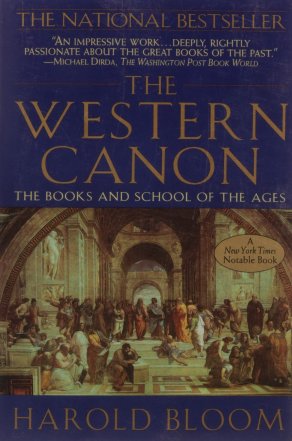
1. Harold Bloom has ensconced him in the Western Canon. This is a dazzling achievement. Bloom is one of those people who strikes you as terribly conceited and utterly entitled to his conceit. If he says your work is good, you have long since exceeded good. I encourage everyone to just do whatever he says.

canon

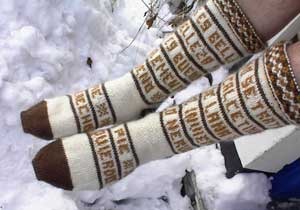
2. Someone has made a sock pattern with a Neruda verse in them. Stephanie Pearl-McPhee (aka the Yarn Harlot) could likely knit up anything for any reason that crossed her brilliant mind, but she chose Neruda. As a result, I spent many months (and quite a few dollars) trying to learn to knit, just so I could have a pair of these. I am not entirely sorry to report that I failed to learn to knit (at least with any skill). The experience left me with an appreciation for Neruda and cold feet.

neruda

Here are a few delightful snippets of Neruda to brighten your day:

neruda1neruda2

neruda4neruda3

And, in its entirety, the poem about the socks:

Mara Mori brought me
a pair of socks
which she knitted herself
with her sheepherder’s hands,
two socks as soft as rabbits.
I slipped my feet into them
as if they were two cases
knitted with threads of twilight and goatskin,
Violent socks,
my feet were two fish made of wool,
two long sharks
sea blue, shot through
by one golden thread,
two immense blackbirds,
two cannons,
my feet were honored in this way
by these heavenly socks.
They were so handsome for the first time
my feet seemed to me unacceptable
like two decrepit firemen,
firemen unworthy of that woven fire,
of those glowing socks.

Nevertheless, I resisted the sharp temptation
to save them somewhere as schoolboys
keep fireflies,
as learned men collect
sacred texts,
I resisted the mad impulse to put them
in a golden cage and each day give them
birdseed and pieces of pink melon.
Like explorers in the jungle
who hand over the very rare green deer
to the spit and eat it with remorse,
I stretched out my feet and pulled on
the magnificent socks and then my shoes.

The moral of my ode is this:
beauty is twice beauty
and what is good is doubly good
when it is a matter of two socks
made of wool in winter.

And, lastly, the “More You Know” segment of our post: Neruda’s poetry teacher was Chile’s other Nobel laureate, Gabriela Mistral. So, if you plan to be blindingly brilliant, you’ll need to snuggle up to other bright types. I tried to find a Nobelist for you to stalk, but those are are still living are reclusive at best (Coetzee) or agoraphobic (Jelinek). You’re best shot is probably Alice Munro  (because she is Canadian, she will probably offer you tea while you wait for the police to arrive and arrest you), but she is 85 and you want to be famous for writing, not for causing palpitations among the literati. In a future installment, we’ll find some Pulitzers or Man Bookers on whom to set your sights.

Alien Invasion

On July 8, 1947, the Associated Press picked up and broadcast a line from a press release issued by the Roswell Army Air Field:

“The Army Air Forces here today announced a flying disk had been found.”

Within a week, the military issued an official explanation that a weather balloon was responsible for the strange sightings in the area. Rumors persist, but generally at the fringe of things.

But, if you think you’ve not been visited by aliens, I say ye nay. Here are some close literary encounters of the best kind.

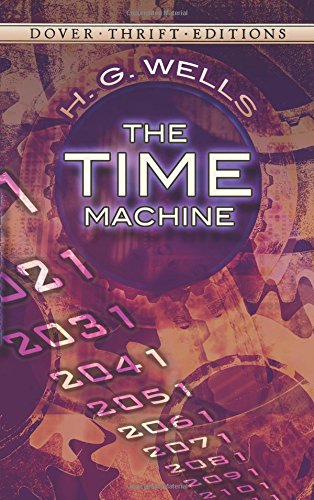
1. The Time Machine

timemachinePurists may argue that the Eloi and Morlocks are not aliens, but simply humans (d)evolved over eons. I will concede the technicality.
But most critics will draw their best conclusions from finding the familiar (typically the extremes of capitalism) in these very alien races. So there’s a least a soupcon of alienism afoot. And certainly an amokery of alienism in Wells’s War of the Worlds.

H.G. Wells, Victorian par excellence, writer, philanthropist, founder, and unwitting father of Steampunk, had a talent for pointing out what is most human (hosting a dinner party to discuss your adventures in time traveling) and what is most alien (hunting a weaker people for sustenance and sport). In times when we’re looking for the best in humanity, it’s good to have some wise guides along the way.


2. The Martian Chronicles

martian

Ray Bradbury spooked me early on with his tales of book burning, but there are some gems in here. The idea of humanity in diaspora suffering from a soul sickness, The Great Loneliness, when realizing how separated they are from Earth is especially poignant.

Of very timely note is his story “Way in the Middle of the Air.” I can imagine that Mars is looking pretty attractive to some segments of the population right about now.


3. Gulliver’s Travels

GulliverNo aliens here, you say? And those horses obsessed with truth-telling were denizens of where, exactly?
Once again, a social commentator takes for his task the improvement of his race. That seems to have been a hobby at one time, like cribbage or stick-and-hoop. Alas, no more. Quel dommage!

Jonathan Swift has an especially acerbic tongue (his recipe for Irish stew a notable example). He reduces his human caricatures to absurd extremes, helping us to see that the Houyhnhmns have a point: “Saying the thing that is not” is poor policy. Foisting this work on adolescent girls, most of whom already have a thing for horses (what is the deal with that, anyway?) is a favorite pastime of teachers, so you must have stumbled upon at least the Lilliputians at some point.

I’m holding in reserve the bulk of the science fiction genre. There are too may easy targets there, in more ways than one.

Good literature can use a lot of tricks to get us to see things in a new way. Sometimes it takes an alien to teach us what it means to be human, and sometimes human behavior is so alien we wonder what we have in common with others of our kind. Dear Reader, I submit that our books, our stories, help us limn the edges of what humanity is, and what it can become. When we choose what to publish or what to read, we are helping to forge those limits and craft those possibilities. Our best books help us become our best selves. What will you read next?


A Great Escape

I don’t know what the news is like in your corner of the world, but the headlines in my area are pretty bleak—violence, hatred, and little too much reality TV creeping into my reality. While Plan A for today was to celebrate National Chocolate Day, I’m going with Plan B: Books so engrossing that you can momentarily forget whatever is currently on your mind. I hope one of your old favorites (or, even better, a new one) is in the mix.

1.  My Man Jeeves

jeevesWondering how a story of a privileged dimwit and his personal gentleman can possibly be relevant to today’s world? It may not be, and that may be what I like best about it.
I thought P.G. Wodehouse would be too stiff for even my starchy taste, but when a surfeit of Audible credits, a penchant for English inflection, and a severe bout of insomnia conspired against me, I feel into the sweet trap of these delightful stories.

Wodehouse is laugh-out-loud funny and can turn a phrase so fresh that a lingering scent of salt sea air caresses your permanent smile. Even as disaster falls, which it inevitably must when a certain Bertie Wooster is about, Wodehouse discusses it with a dab hand, making you feel a sense of recognition, perhaps even nostalgia, for the perpetual shadow of impending mayhem:

“Unseen in the background, Fate was quietly slipping lead into the boxing-glove.”

Ah, P.G.! Even thoughtful enough to craft your nom de plume after the world’s best teabags.

These are books which I can heartily recommend in audio as well as print. There’s also a delightful BBC version starring a very young Stephen Fry (Jeeves, of course) and an impossibly young Hugh Laurie, available on Acorn.

2. Les Miserables

lesmis

I will stipulate that, rip-roaring as his jingles are, a certain Broadway type makes it quite difficult to see the number 9430 and not wonder what happened to 24601. C’est la vie.

This is a masterwork of a caliber that helps you understand where the word masterwork came from. It is utterly great. Leo Tolstoy described it as among the greatest—if not the greatest—work in literature. That’s a heck of a blurb even if he did not have the foresight to anticipate the work of Stephanie Meyer. (No hate here; I read them.)

Victor Hugo‘s works are not satisfied with merely describing the best of humanity; they elevate the reader. You are a better person after you read this. They ought to have prisoners read this instead of making license plates. (Although, given Valjean’s talent for avoiding capture, I can see why that idea might have been nixed.)

Personal story: When taking my vast gaggle to the library (But Mom, there’s nothing to read in our house [Criminey!]), my oldest, then in his early teens, plucked this off the shelf, walked up to my harried self and said, “Can I get this one?” “My son!” I cried, through misty eyes, spooking the browsers. He did, in fact, read it and does not currently lead a life of crime. My eternal gratitude, M. Hugo.

3. The Beekeeper’s Apprentice

beekeeper

I used to look upon genre fiction with the same sort of disdain that most American women have for my housekeeping. “Sure it’s fine for all and sundry, but I have a degree in reading. I should set my sights higher,” thought ignorant I.

Predictably, like all those who forget why they do a thing in the first place, I began to [true confesh alert] lose my passion for reading. I would dutifully plod through the “suitable” bestsellers and try to get interested in Silas Marner (I’m sorry, Mary Ann). But that flickering box in the corner was starting to catch my eye. “Maybe if I watched Dynasty, I’d be able to keep up with the office chit-chat,” thought criminally ignorant I.

Smart Friend to the rescue. (If you don’t have one, get a Smart Friend. Get as many as you can find. They are just amazingly useful and delightful ways to populate those parts of your life that cannot hold books or are not amenable to dusting.) She must have tried to sell me on Laurie R. King (and Dorothy Sayers! Yes, I thought myself too highbrow for Sayers!) a half-dozen times before I relented.

“It’s Sherlock Holmes.” (Meh. [NB: Mr. Cumberbatch was in nappies.])

“There’s a young woman.” (Whatevs. Not waving the feminist flag in my imaginary worlds.)

“She’s really smart.” (Mild interest, smart people having recently become an interest of mine.)

“She’s Jewish and she studies theology at Oxford.” (Hello.)

“In the Victorian era?”

“Yep.”

“And the writing?”

“Really good.”

Thus did my Smart Friend set me on a course of devouring the twenty or so books in the series (I have a signed copy of the latest, The Murder of Mary Russell) and, by encouraging me to read things just because they were interesting (an entirely new idea to me), may well have saved me as a reader. Eternal gratitude, Smart Friend.

Beekeeper is the first book in the series, and this is one where it’s best to go in order.

4. Still Life

still life

Another Audible discovery, this series by Louise Penny is utterly delicious. Most of the audios were voiced by the incomparable Ralph Cosham and get this listener’s highest praise.

Still Life (again, take this series in order) is the perfect cozy: Small community (you will fall in love with this town), well-crafted characters (ditto), classic detective (double ditto). It is gentle. There are pine breezes and fresh-baked croissants and homespun people who, as Canadians, are not so rural as to offend.

Penny spoke at BEA in May and she was as charming, as deep, and as human as her work. A person could cry listening to her talk about the reason she writes. A person may, in fact, have done so.

Penny is also wickedly smart and drops in plenty of wit. A favorite line comes later in the series when a woman is searching for her son who, for reasons not briefly related, is named Havoc.

“‘Havoc!’ his mother cried, letting the dogs slip out as she called into the woods.”

Yes, please. More of this. Whenever this old world starts getting you down, make a cup of tea and settle down for a braincation in Three Pines.

When you’re wondering what to read next, here’s wishing you many breaks from reality of the non-psychotic kind.

Cooking the Books

July 6 is National Fried Chicken Day. After a few false starts—literary chickens, famous cowards—I asked a sensible person what books could possibly relate to food. I’m not sure which I value more: sensible people or books. But I can never seem to get enough of either.

To celebrate today, here are some cookbooks that are actually worth messing about with:

1. Mastering the Art of French Cooking

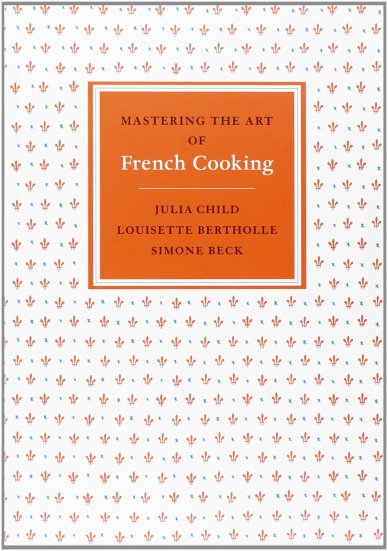
frenchcookingThis might be fish in a barrel, but should you find yourself faced with a barrel of fish, you’ll want Julia Child in your corner. I didn’t care for Julie & Julia (it wasn’t just the lobster), and the PBS series didn’t ring my bell. But Julia’s My Life in France? I fell in love with this brilliant, determined woman who would not let the snobbery of Le Cordon Bleu, the third-class status of mid-20th-century womanhood, or a six-foot pile of onions defeat her.
Plus, she was probably a spy.

So, I dug in with the two-volume set, bought an omelette pan (yes, a pan for just omelettes) and practiced tossing coffee beans on the back deck per Julia’s instructions. My neighbors moved away, but now, years later, I can entertain respectably and crank out a truly masterful Boeuf Bourguignon.

My recommendation is to proceed the same way and start with My Life in France. If you don’t have a sense of who Julia is, you might be too easily deterred to ask your butcher what a lardon is. (That is a question that practically invites insult.)

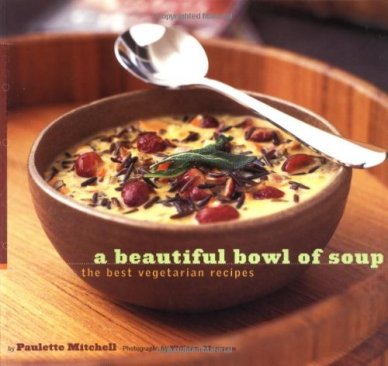
2. A Beautiful Bowl of Soup

soup

My local lunch dive has been written up in Saveur, GQ, and Bon Appetit. It is just about the best place anywhere to have a meal and you can get a patty melt and fries or the world’s best veggie burger with a side for less than five bucks.

The house is known for its range of vegetarian offerings and Mistress of the Kitchen Carla Tucker almost always has a big kettle of soup simmering. I love soup, but when I’d ask, the day’s pick might be something involving beets or some sort of squash and I’d chicken out (just too exotic for my pedestrian taste). But Carla kept trying. She’d offer a taste; I’d say no thanks. One day, while my order was on the grill, she dropped off a bowl of something unpronounceable: “Just try it.” And wow. I’m a believer.

Carla recommended this book to me when I raved about her soups. You have to be brave: These recipes have combinations you might never have tried, but they make a winter’s day something to look forward to. And, while I’m not vegetarian, I appreciate all the more a dish that can satisfy my appetite with the sort of ingredients I might otherwise classify as garnish.

3. Moosewood Cooks at Home

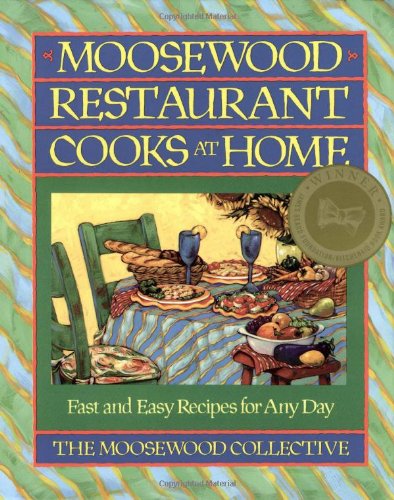
moosewoodAgain, not a vegetarian. Also not a Communist (check out the author on this one). But this edition of Moosewood is a beautiful pile of gorgeousness with one recipe that alone made the purchase worthwhile: the unimaginatively named Curried Vegetables with Dahl. In my house we call it “Roald Dahl,” because it takes less time to say. And, well, because obviously.
If, like me, you have one large pot and one dull knife, the chopping for this dish can take an actual hour. If, like me, you persist in making this dish weekly for years and never buy yourself a proper knife, shame on you! You’re going to lose a finger one day, mister, and then will you be proud of your frugality?

So get a knife and try some of these recipes. The Roald Dahl is a great dish to learn how to make a good curry at home (that’s about $1000 worth of carryout expense saved all by itself), and it forces you to keep things like fresh ginger about the house. Let me tread some dangerous ground and suggest that Roald Dahl is even better with a good dose of chicken added.

4. Better Homes and Gardens New Cook Book

newcookMy edition of this classic is old. Really old. The stains on the cover are lard.

But that’s what I love about it. As a young mother, searching for the basics on how to roast a whole chicken, I turned to this and found it truly, frighteningly basic:

“Remove pin feathers.”

There was something about beaks and feet too. I skipped down to the part where the chicken seemed to match what I was holding. Unfortunately (for me, at least), chickens of yore did not come with their gizzards jammed into their neck cavities. So that first chicken came out of the oven packing a surprise. I had to call uncle, by which I mean Mom, who assured me that paper-wrapped giblets won’t trash your chicken (but plastic-wrapped ones will). Kitchen victory!

I’m not sure if the newer editions have made the assumption that your groceries are processed and pre-packed. If so, scan your local thrift shop for an older version. Any book of cookery will be useful, but in the event of apocalypse, you’ll want to know how to round up some satisfying grub. Even if you have to remove its pin feathers first.

Surviving in the near-wild, learning to like vegetables, having wine quite literally with your dinner—is there nothing books can’t teach us? I submit, Dear Reader, there is not.

The Principle of the Thing

July 5 is the birthday of Isaac Newton’s Principia Mathematica. I have always wanted to take a summer with the Principia and derive the calculus from first principles; however, I have not yet had a summer in which I was smart enough to do this. (My engineering calc prof had a slight accent, thus rendering my understanding of his discussion of dv/dt somewhat limited. I spent six months trying to grasp the basics of “dividity.”) If you have read the Principia, my recommendations are likely far too juvenile for you. But, if you like a fast-paced sciency read that doesn’t require the aid of your trusty TI-80, forge ahead.

1. Godel, Escher, Bach

GEBDouglas R.Hofstadter’s discussion of formal systems and the inherent flaws in self-reference (and this before the advent of the selfie) is pure magic. Even more so, perhaps predictably, is his Metamagical Themas

Hofstadter’s work combines philosophy, art, music, and math in a way that makes them all at least an order of magnitude more interesting. This book introduced me to the work of Escher (yes, it should have been a college roommate, but it didn’t work out that way), Godel (with whom I still have but a nodding acquaintance), and J.S. Bach and what a fugue is.

Ah, Bach!


2. The Physics of Immortality

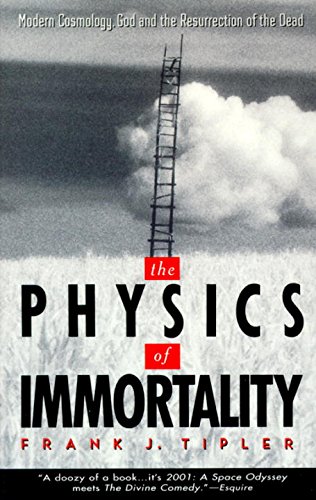
tiplerOK, stay with me. I’m not saying this guy is right. Here’s what I am saying:
  1. This guy is smart. Frank J. Tipler is a world-class cosmologist who might possibly have invented time travel. But not yet. But if so, then, clearly, already.
  2. For any respected scientist to publish a theory that posits the existence of God takes courage. It shouldn’t, because Science. But it does, because most scientists have spent a lifetime recovering from the ill effects of bad religionists and have a near-allergy to the subject.

I thought it was very thought-provoking, if a bit quite literally deus ex machina at the end. And, TBH, I did not read all the footnotes, because I simply cannot. My mathematical education stopped at pointy E and, as mentioned, dividity. If you are in the sciences, at some point someone is going to ask you about the Omega point and you’ll want to have an opinion, so take a tour and form one. And, if you have any thoughts about the Internet as Teihard’s noosphere, I’d love to hear them.

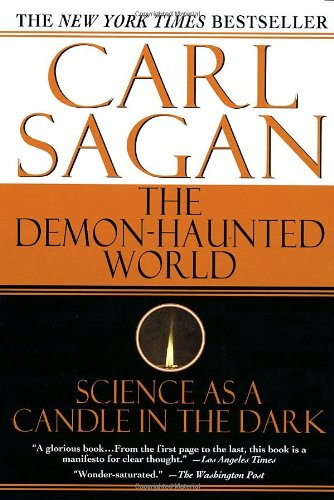
3. The Demon-Haunted World

sagan


It’s dated, yes, but expecting Carl Sagan to keep his cultural references up to date is a bit unfair. These are the broad, turtlenecked shoulders upon which the deservedly popular Neil deGrasse Tyson stands, and this is one of the best defenses of science I have read.

For people of faith, I’d suggest it is required reading. Sagan clearly shows the line between keeping an open mind as to all the things science does not yet know, and keeping a mind so open that any sort of trash can blow in. If you want to get a peek at the reason behind the just plain nastiness prevalent in some pro-science, anti-faith bestsellers, this is a good place to look.

Sagan doesn’t shriek or moan, he simply states his case for a rational approach to the world as the best chance we have of not dying as a species which, I hope, is a concept that everyone can get behind.

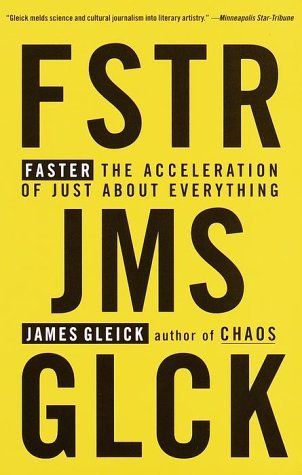
4. Faster

fasterThe first time I remember feeling “busted” by an author was while reading this book. For starters, I really did not notice that there were letters missing out of the title on the cover. I’m not saying merely that I was able to read the title without them (which apparently everyone can do), I’m saying that I did not notice their absence. It was a bit alarming when I did. Then, somewhere among the first pages, James Gleick nailed me. “Remember when microwaves were impossibly fast?” he asks. “Oh, yes. Well, faintly,” I think to myself. “Yes, it did used to take more than 90 seconds to make dinner.” “And now 90 seconds seems like a ridiculously long time, doesn’t it?” James asks, in more or less those words.
“What are you supposed to do for 90 seconds, just stand there? Or, do you sometimes, instead of pressing 90, press 88, because it’s infinitesimally faster to press the same button twice?”

Oh my actual G, James Gleick, how are you in my kitchen!?! I genuinely thought I alone had cracked the efficiency code of microwave programming. This must be what it’s like when a mentally ill person finds a doctor who can also see the invisible people. Gleick very early on found and named the illness virtually all of us have—a desperate need for everything to happen now, unless it has already happened, which it should have, because we are so very extremely busy we cannot wait for anything.

The book’s single flaw, in my opinion? It’s a really quick read.

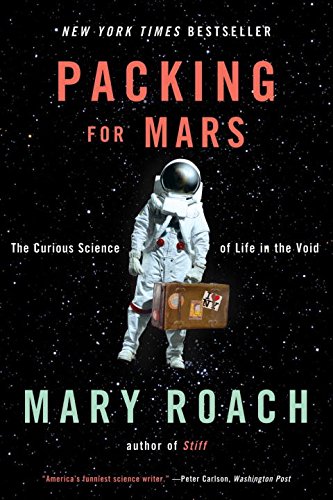
5. Packing for Mars

51XOMTe3NCL

Mary Roach was unknown to me until one author breakfast at BEA many years ago. She was on the panel along with, get this, emcee Jon Stewart, John Grisham, Cory Doctorow, and Condoleeza Rice. “Poor Mary Whats-it,” I thought. “Nobody is going to remember her.”

I packed home the ARC and started paging through. By the end of the week, I had bought and read all of her books.

Roach seems to share the same sort of serial obsessive disorder I have. You know the drill: Once you hear about something a bit interesting, you feel the need to immediately devour all knowledge on the subject. She picks some great topics—from the practical concerns of space travel in Packing for Mars, to the afterlife (how much does a soul weigh?) in Spook, to the rather bizarre way we deal with death in Stiff. More than once, I’ve seen a title of hers (Gulp, for instance) and thought: Nope, this isn’t going to be interesting at all. But, I’ll be deuced, she pulls it off every time.

Her research is meticulous. Where this would be boring in another writer, her persistence to hunt down the slightest detail invariably leads down a fascinating new avenue. With this writer, there is no road less traveled.

These are just a few thoughts to get you started. If they are not challenging enough, then I invite you to spend the day considering whether inertial frames effectively disprove the theory of gravity and, if not, whether the time-dilation effect of varying frames supports general relativity or explains why we experience time at all. Well, maybe not the whole day, but for the length of your daily constitutional. Do submit results or your thoughts on better pop-sci reads.