
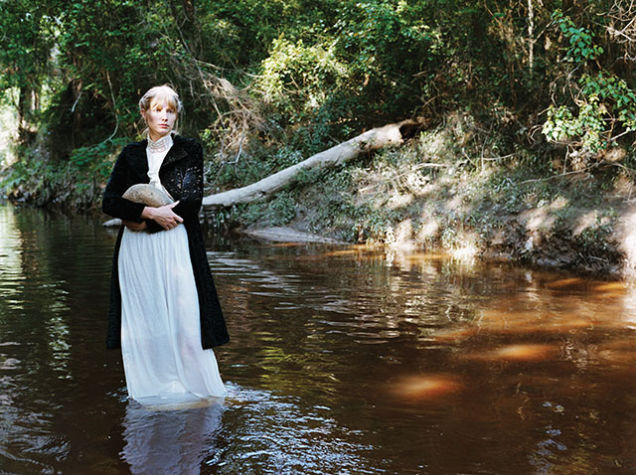
Dear Reader, today we mark a solemn anniversary. On this day in 1942, William Faulkner, whose works to date (The Sound and the Fury, Light in August, Absalom, Absalom!) were not lucrative enough to keep body and soul knit together, embarked upon his screenwriting career. Yes. This happened.
Humphrey Bogart was the biggest box-office draw of the day and Warner Brothers thought the two would be unstoppable. But consider: Bogart was a chain smoker (hence, the eponymous rude habit of “bogarting” [don’t act like you don’t know what I mean]). How was he ever going to make it to the end of a Faulknerian sentence? In a phrase no one has ever used before: Hemingway to the rescue! WB put Faulkner to work doing film treatments of To Have and Have Not and then Chandler’s The Big Sleep. This was a boon for folks like me, who would otherwise never have endured Faulkner’s work in any form.
Surely, though, this was an aberration. Our society does not hold the written word in so light esteem that we’d make authors work for a living. Right? The sad truth follows:
1. Herman Melville, bank clerk
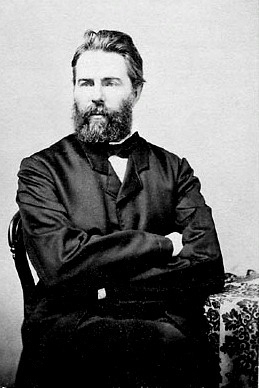 Whether he would prefer not to or no, Melville toiled at a bank in Albany, New York, beginning in 1832. Subsequent stints as English teacher and cabin boy proved equally unsatisfactory, so he boarded a merchant ship and went properly to sea. During his five-year voyage, he explored strange new worlds (including living with some cannibals in the Marquesas), sought out new life and new life forms (literally selling sea shells by the seashore in Tahiti), and was boldly imprisoned by mutineers.
Look how happy he is in this photo. Wearing a tie. Sitting in a chair. Having a table at elbow. He has landed the white whale of Indoorland. Well done, Herman.
2. George Orwell, policeman
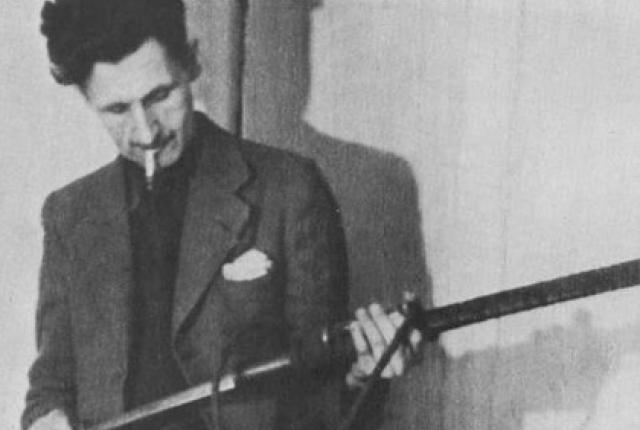
The man TIME magazine would awkwardly hail as “Big Brother’s Father” one day enlisted (yes, that’s the correct word) in the Imperial Police at the age of 19 and went off to merry Mandalay, where he would be haunted by Mister de Winter’s first wife, Rebecca, (not true) and eventually catch a nice whiff of dengue fever (sadly, true).
Known for perfectly serviceable works such as 1984, Orwell most importantly crafted the definitive guide on the making of tea, lauded (properly) as among the mainstays of civilization. He was also a linguist and spoke 9 languages, including the Tibeto-Burman tonal language, Shaw-Karen.
So cruel was life to this man that he retreated to an abandoned building in the Inner Hebrides after the death of his wife (and after many unsuccessful attempts to replace her). Fortunately, he eventually contracted tuberculosis, which was extremely fashionable at the time. Do it to Julia, indeed.
In this photo, he is doubtless wondering why he was not posted to Japan, where he might have picked up the proper technique for hara-kiri.
3. Kurt Vonnegut, car salesman

Did you really think these would get better? No Disney ads on this blog, Friend. (Dear Mr. Iger, I can make you a competitive offer.)
Kurt Vonnegut opened (not just sauntered into one Saturday morning, but opened) a Saab dealership in Barnstable, Massachusetts, five years after his first novel, Player Piano, was launched. He credited his lack of success at selling Saabs with the prejudice the Swedes displayed in withholding the Nobel.
This is a photo of Kurt visiting the air-raid shelter where he waited out the fire-bombing of Dresden as a POW, trying mightily to catch a little of Orwell’s complaint.
4. J.D. Salinger, your activities director
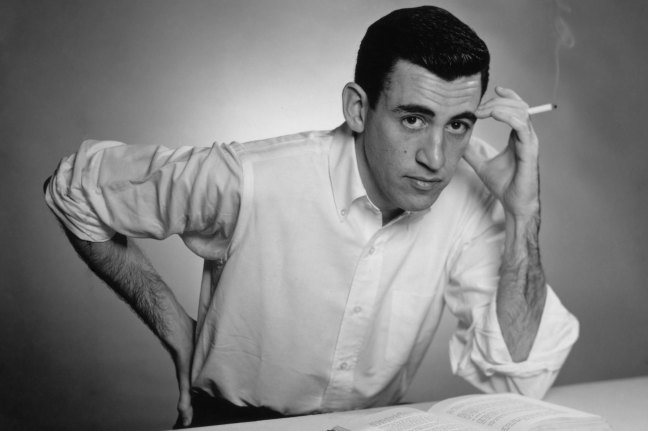
Nobody’s fool, J.D. tried to go about things the right way. But when his relationship with Oona O’Neill (daughter of Eugene O’Neill) went south, he had to get an honest job. I’m not sure he had to go whole hog and become the activities director for the MS Kungsholm, but it was a Swedish ship (seems he and Kurt were working the same angle).
Hard to imagine this fellow setting up the shuffleboard tourney. I’m seeing swaths of rye around the courts. And then, then, ohmygosh, people are just running off the edge of the ship! And no one can catch them, because J.D. has been so busy with the pinochle seatings that Holden Caulfield hasn’t been written yet. The horror!
There are more, many more: Agatha Christie as druggist’s assistant, James Joyce running a movie theater, Kerouac washing dishes and Burroughs killing bugs. Virginia Woolf may have had it worst of all. She became a publisher and it made her so cranky she rejected James Joyce. Not a date with Joyce, mind you, but Ulysses. She sold out eventually and killed herself three years later. Dangerous work, this writing life.
So, next time you breezily bypass some Great Work and think, “I’ll get it at the library,” remember: You are a party to this grave injustice. Writing is hard and writers need to eat—dust and cocaine, at a minimum. Go treat yourself, some lucky author, and the world and support your local bookstore (or massive online retailer).
The weekend’s coming. What will you read?

 This
This  If you ever see a non-Russian person under the age of 80 reading
 Bibliophenia