How to Transform Your Reading Life in 2025

Photo by Ivo Rainha on Pexels.com

As the calendar turns to 2025, the promise of a fresh start is upon us. Like an unopened tome or a blank page, the future fairly crackles with possibility. For us book lovers, it’s the perfect time to set reading resolutions that inspire, challenge, and delight. Be bold! Cast out into the deep of your wildest aims and see how far you can get. With reading, the journey is the destination.

So, what kind of reader do you want to become in 2025? Here are five ideas to inspire your resolutions:

1. Explore a New Genre

One of the simplest ways to keep your reading life fresh is by venturing into unfamiliar territory. If you’re an avid fiction reader, consider delving into narrative nonfiction or memoir. Love mysteries? Try a sci-fi or fantasy novel. The beauty of exploring a new genre lies in discovering stories and voices you may never have encountered otherwise.

I once conquered a reading slump by (gasp!) delving into genre fiction. Where I once would have disdainfully passed the bestsellers for their lack of “improving” content, I now dip an adventurous toe into anything that catches my eye. I may have read a Dan Brown. (I may have read them all.)

Start by asking friends for recommendations or browsing online lists curated by fellow readers. You might find yourself enchanted by a gripping historical fiction novel or laughing out loud at a humorous essay collection. Challenge yourself to read at least one book in a genre you’ve never tried before—you might just find a new favorite!

2. Commit to a Reading Challenge

Is there anything better than a spreadsheet of your TBRs? I can’t imagine so. Reading challenges can turn your personal goals into a community experience. Popular challenges like “52 Books in 52 Weeks” or themed lists (e.g., books by diverse authors, award winners, or books set in different countries) offer structure and excitement to your reading year.

Want to read like Rory Gilmore? (She’s fictional, so don’t sweat it if you get bogged down.) How about Ernest Hemingway? (Though, truth be told, his story doesn’t have a cheerful ending.) Want to read everything penned by James Joyce? There’s a list for just about any taste and if you make a new one, you’ll have no shortage of interested followers.

If you live your life online, platforms like Goodreads provide easy ways to track your progress and connect with others taking on similar challenges. I tend to go for fountain pen on cotton rag paper for the tactile feel of a mission properly accomplished.

3. Revisit a Favorite—Even a Bad One

I confess, I’m not a re-reader. There are too many books on the shelf and I take the one-and-done approach to most of them. That said, some books are worth revisiting. Whether it’s a beloved favorite or a classic you’ve never tackled, returning to familiar stories can be incredibly rewarding. Books like Pride and Prejudice, 1984, or To Kill a Mockingbird often reveal new layers with each reading, offering fresh perspectives on themes, characters, and the world around you. The pages haven’t changed, but you have.

If you’ve never re-read a book, start with one that left a lasting impression. It’s OK if it’s not high literature. You can bask in Black Beauty or recall the thrill of learning How to Avoid Huge Ships. Re-reading can feel like catching up with an old friend, reminding you why you fell in love with reading in the first place.

4. Incorporate Audiobooks into Your Routine

Life gets busy, but audiobooks can help you squeeze more stories into your schedule. Whether you’re commuting, exercising, or tackling household chores, audiobooks turn mundane tasks into opportunities for literary escapism. I’m a massive audiobook fan, because instead of “wasting time with my nose in a book” (yes, childhood was a challenge), I can get stuff done and still do the thing I most want to do.

Platforms like Audible, Libby, and Librivox offer extensive libraries to choose from. For beginners, focus on genres that thrive in audio format, such as thrillers, memoirs, or full-cast productions of plays. Find narrators who match your preferences—a great narrator can bring a book to life in unexpected ways. One caveat though: just as a skilled narrator can add a lot to the reading, a poor one can be torture! Don’t confuse the text with its reader and don’t throw the narrative out with the narrator. Sometimes the page truly is best.

5. Support Local Authors or Indie Publishers

Do you write? If so, you know what an absolute curse it is and how richly it should be (and, alas, rarely is) rewarded. This year, right this wrong and resolve to explore books that spotlight voices close to home or from smaller, independent presses. Local authors often bring unique perspectives and rich cultural insights to their work, while indie publishers are known for championing diverse and underrepresented voices. Yes, it’s a gamble, but at worst you’ll have spent a few dollars in the direction of someone who has really worked for it. And at best? Well, you know.

Check out independent bookstores, attend author events, or participate in local literary festivals to discover new gems. Not only will you be enriching your reading life, but you’ll also be casting a vote for a vibrant literary ecosystem within your community.

Thoughtful reading resolutions can transform your relationship with books and deepen your appreciation for the written word. Whether you’re stepping into a new genre, joining a reading challenge, or revisiting an old favorite, there’s no wrong way to set your literary goals.

So, what’s your top reading resolution for 2025? Share your goals in the comments below—we’d love to hear from you! And don’t forget to subscribe to our blog for more bookish inspiration throughout the year. Here’s to a year filled with unforgettable stories and enriching reads!

Making a Difference

“There are probably words addressed to our condition exactly, which, if we could really hear and understand, would be more salutary than the morning or the spring to our lives, and possibly put a new aspect on the face of things for us. How many a man has dated a new era in his life from the reading of a book!”

— Henry David Thoreau, “Reading,” Walden

The fourth Saturday in October is “Make a Difference” Day. It’s a great time for neighborhood cleanups, planting flowers in public spaces, or doing a bit of volunteer work. But, like all days, it’s also a great day for reading.

If you have any doubts as to what difference one person can make, take a gander at one of these tales and be inspired.

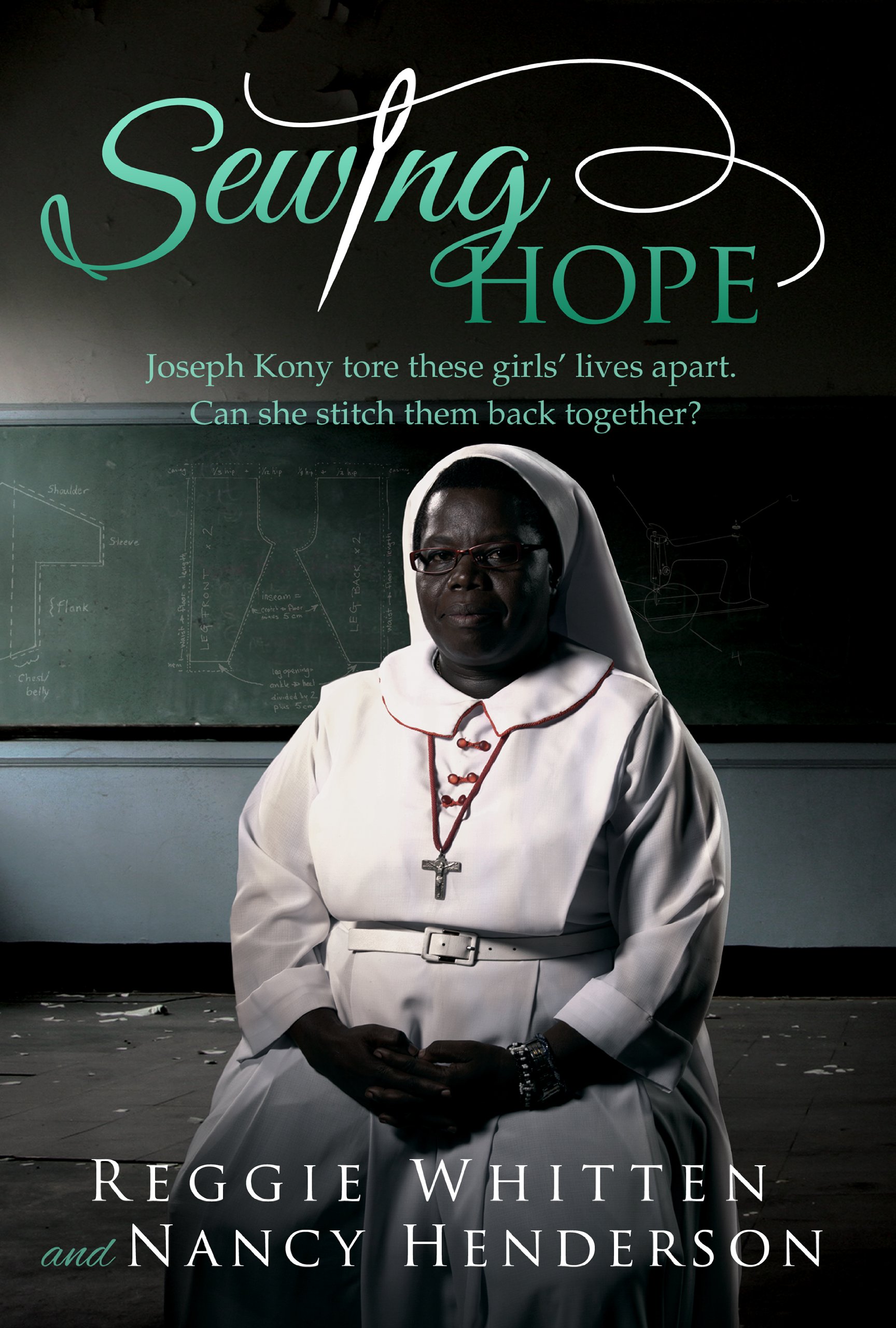
1. Sewing Hope

sewinghope

Perhaps, like everyone else with Internet access, you’ve seen Kony 2012, the story of the LRA in Uganda. If so, maybe you’ve wondered whatever became of all those devastated landscapes and broken lives.

Some of those people were lucky enough to meet Sister Rosemary Nyirumbe, who founded St. Monica’s Vocational School in Gulu, Uganda. She takes girls discarded by society and actual trash and turns them into something truly amazing. Sewing Hope explains how this happened and (bonus!) your purchase helps it to keep happening.

Sister Rosemary was named to Time magazine’s 100 most influential people list in 2014 and was awarded CNN’s “Hero” title in 2007. Somewhere along the way, she offered to punch Stephen Colbert in the face.

Before or after your reading, check out sewinghope.com to get a head start on that Christmas list.

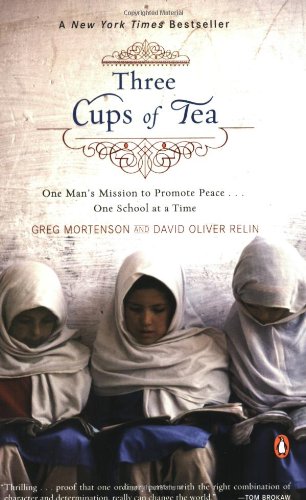
2. Three Cups of Tea

cupsoftea

There is plenty of controversy about this book and, while not wishing to whitewash things, I think it is important to stress that this guy built 55 schools in places that really, really need schools. (If you have some feel for the difference knowing how to read and write has made in your life, imagine the impact on the children in 55 schools.)

Essentially, this fellow tried and failed to climb a very big mountain. While recovering from a spectacular failure, he found another (I would argue better) goal. Mountains do not, I think, have a deep need to be climbed, but children do have a deep need to be educated.

Perhaps most astonishingly, the book comes in at just over 300 pages or, at my rate of reading, exactly three cups of tea. That’s some precision.


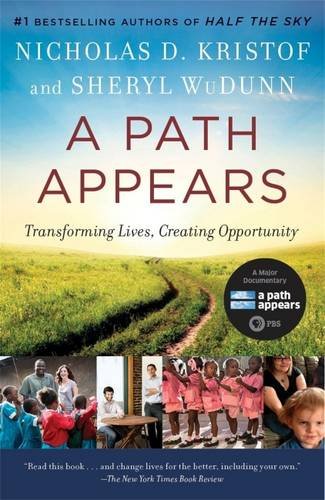
3. A Path Appears

pathappearsNicholas Kristof is a world-changer all by himself. When he profiles someone in his NYTimes column, things change. (His profile of Dr. Tom Catena’s work in the Nuba Mountains generated enough donations to strain the capacity of the organization trying to account for them all.) With Sheryl WuDunn, Kristof has followed the amazing Half the Sky with a book that walks through the lives of ordinary people and highlights the extraordinary difference they have made.
Alert: The first chapter is kind of a gut punch. I had to set the book down for two months before I could forge ahead with it.

Kristof and WuDunn make it seem simple to make the world a better place. Not easy, but simple. Maybe it is.


If none of these are tempting and you have no difference-making plans for the day, at least dust off (or Google) a copy of Walden and consider taking a walk in the woods. (Try to turn a blind eye to the fact that Henry David lived just two miles outside the town of Concord while making it seem as though civilization was light years away. He did have to do without Internet, so it was no, well, walk in the woods.)

National Read a Book Day

OK, friend, why are you here? It’s read a book day.

How can you do that surreptitiously while at work? I can’t suborn such behavior, but you already know about this:

http://www.gutenberg.org/

You probably have seen this:

https://itunes.apple.com/us/app/free-books-ultimate-classics/id364612911?mt=8

You might find this new:

https://store.kobobooks.com/p/free-ebooks

And you doubtless have this already:

http://www.freebooks.com/

(I mean, c’mon, it’s literally “freebooks.com.”)

So, open one and read a page. Just a page. It could even be this page:

15thfrench

Enjoy, fellow Pheniacs!

Frankenstein Day

Given the sad news of Gene Wilder’s passing, I’m sure some of you are pronouncing the above in a non-traditional manner: Good for you. However, in a *spooky* coincidence, August 30 has been designated Frankenstein Day because it is the birthday of Mary Wollstonecraft Shelley, who penned the classic over a weekend on a dare (more or less) to the undoubted chagrin of her cottage-mates: husband Percy and King of Jerks Byron. So full marks to the lady for that.

Here’s a nod to some of the best monsters in the literary landscape:

1. Dracula

drac

Lugosi and Karloff are forever linked in my mind for their contemporaneous and masterful portrayals of the two biggest baddies ever. Bram Stoker’s Dracula built upon the legends of Vlad the Impaler, an all-around unpleasant fellow from Wallachia, who did win the admiration of many civic leaders and even the pope for stemming the onrush of Ottomans into Europe, thus keeping it some sort of Christian. (Authorities vary on how Christian you can call a man who likes to impale 30,000 people on the lawn while he breakfasts. In fairness, he did not partake of the roasted children, saving that dish instead for their mothers, whom he then had killed.)

But savvy historians may observe a modern-day note of rebellion in Stoker’s work. A villainous foreigner’s bloodlust devastates a countryside, making people despair of both life and afterlife? Any bells? Does it help to recall that Stoker was Irish and writing at the turn of the 20th century? Could he be brought up on terrorism charges for suggesting that the only remedy was a stake through the heart (much the technique favored by the Fenian Dynamite Campaign)? Read and tremble anew.

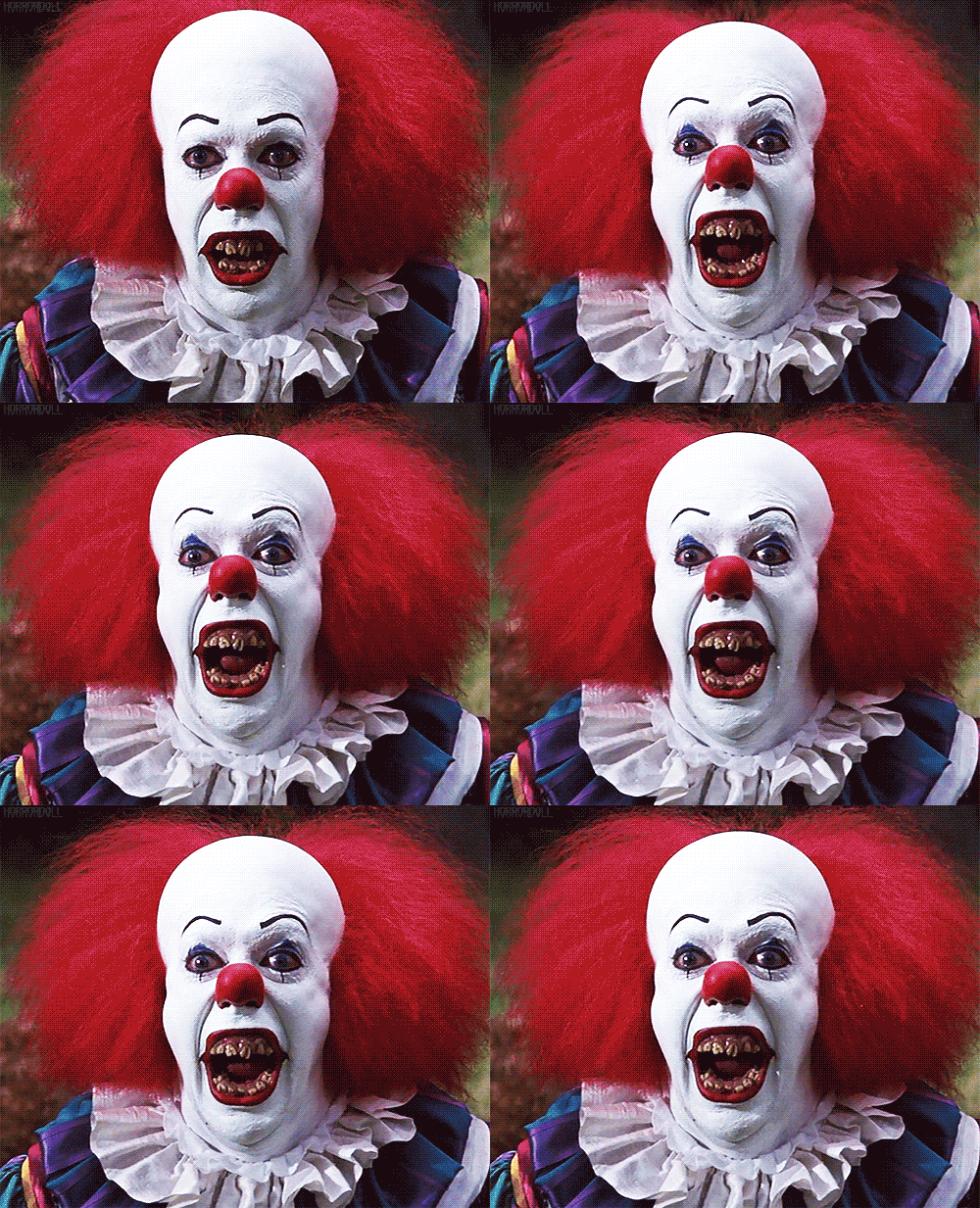
2. It

it

The master of horror really phoned this one in. He made a teenage girl terrifying in Carrie, a car haunted in Christine, and a lovable mutt the town terror in Cujo. Scary clowns? Why not just tell us a story about the homicidal maniac who escaped from the federal pen and now has hostages in the chainsaw store? Fish in a barrel, tsk.

Like just about anyone who disguises themselves, clowns have been scary since before they dug up John Wayne Gacy’s crawl space. [Fun fact: Gacy’s Wikipedia page has a subhead “Businessman and community volunteer.” This is horrifying. It’s “businessperson,” people. Get with it.] I’m not sure why so many cultures feel the need to frighten their children in this way (there are never stories about men in vans or diptheria, but clowns, dolls, houses [anything otherwise like to make a  young child feel safe] abound), but it’s near the top of the list of human hobbies.

Also, Mr. King, we’re all still waiting for the followup, Poundfoolish. I’m imagining a Brit afraid of weight gain and money loss…ah! you’re too right, the Times has that well managed.

3. Grendel

grendel

Not wishing to cast aspersions on what I’m sure is a fine and horrible monster, the scariest part of Beowulf for me was the Old English. But you can get Seamus Heaney‘s translation these days (Be careful: There are a lot of mismatched products linked here.) and even some excerpts read by himself on audio. Who likes to fall asleep listening to monster stories? This girl.

I found it interesting as an undergrad that we used so many details of this poem to illuminate the Anglo-Saxon life. We know that the Heroic Code was a pillar of social relationships and that wirgild was a culturally appropriate way to compensate for having killed someone. Hrothgar’s hall was emblematic of the times and Beowulf was the ideal warrior. If it was in the poem, we could be sure there was some correlative in the culture. I regret that I did not think to ask: So, were there monsters?

I hear there was a movie, too, with Angelina Jolie, presumably as Grendel’s mother. I did not watch the film, but if I had small children—particularly if they were ethnically varied—I would find that very scary indeed. Unfairly, perhaps, I imagine it lacks some of the poetry of the original.

4. Nyarlathotep

lovecraft

Somewhere in adolescence, where two roads diverge, one to conventional thinking and social success, the other to the rarer perks of geekdom, there is a signpost made entirely of the works of H.P. Lovecraft.

Unknown in life, he has posthumously become the godfather of horror. If you have never heard of him, you have a nerdy friend who has.

Among his many creepy creations, my favorite is the Crawling Chaos, Nyarlathotep (also a pet name for the hall closet). While the Old Ones—the ancient gods of the Lovecraftverse—are sleeping (while yet remaining extremely frightening), Nyarlathotep roams the world, taking many guises. He is sort of the waking caretaker of the Old Ones, but no scrivener he. He is too terrifying to describe precisely, but Lovecraft describes how those who encounter him feel, and that does the trick. Having met this beast, can you imagine the unfathomable, next-level horror of Cthulhu? Yes. Yes, you can. Keep the lights on.

That’s my off-the-cuff report of what’s frightful in fiction. Noticeable for its absence is the truly scary way an observant reader can scry to the page when John Grisham’s editor called and reminded him of his deadline or the far scarier parts of the world where people do not read at all. We’ll leave such imaginings to braver souls.


Children of the Lorn

August 11 is Sons and Daughters Day. Which is ludicrous. Any parent can tell you that every minute of every day is Sons and Daughters Day. Even Mother’s and Father’s Days are for the children so that, when we’ve gone to our reward, they can remember all those sweet lanyards and ties they’ve given us and console themselves that they were good children.

That said, being the child of a famous author can be challenging. You’ll often hear authors respond to a question about which book is their favorite with a demurring, “That’s like asking me which child is my favorite!” The subtext being: Please don’t ask me that. I’m not entirely sure I’ll remember their names. Writers’ heads are haunted with the uncreated imaginary casts of their works; they can’t be expected to keep all the details of mundanity at their fingertips.

So, to celebrate the day and those who have borne this particular burden, I give you:

1. What? The Dickens?

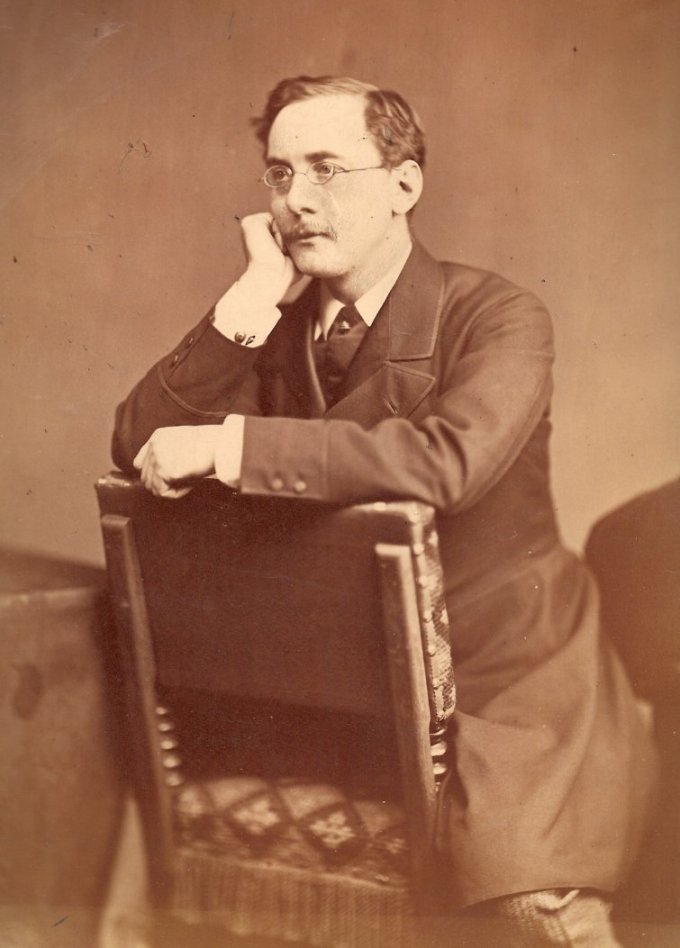
Dickensjunior-1874Everything about this photo tells the tale. The way he’s seated on the chair, his back to whatever useless endeavor had recently held his attention; the toothbrush mustache, styled to disguise a permanent frown; the wistful waiting for it all to be over. Poor Charles Dickens, Jr.

The unfortunate soul, having inexplicably failed to make a living selling tea in Victorian England, cleverly set up shop as a printer. Son of bestselling-author-just-about-ever buys a printing press. Can’t fail, eh? It did. So, his old Pop took him on as editor. Yes, imagine those conversations.

Still, young Charley had some success “in his own right” (as our Olympic announcers are wont to say), especially with Dickens’s Dictionary of London, 1888: An Unconventional Handbook. Had he been anyone else’s son, his life might have been just fine. RIP, Little Boz.

2. Dumassery

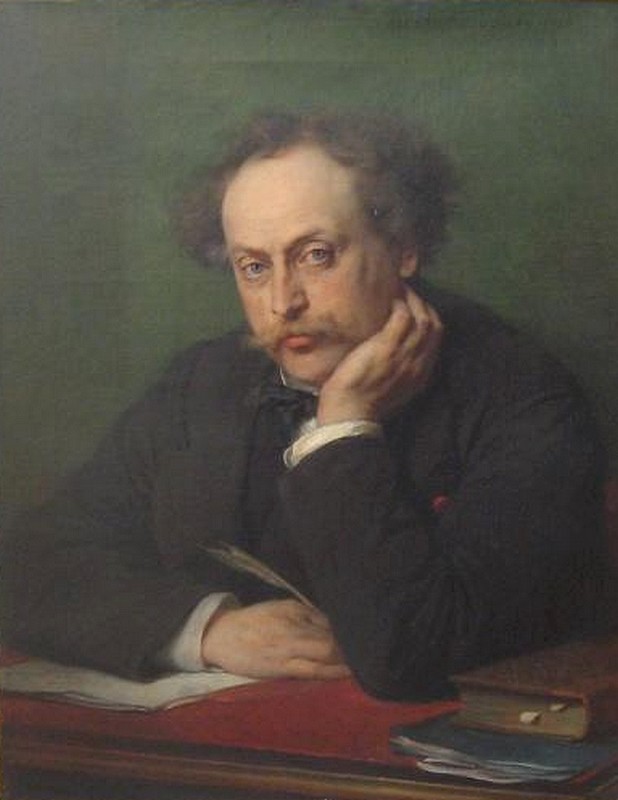
Alexandre-Dumasfils

Here we have the very portrait of surly resignation: Alexandre Dumas…fils. His father penned a few ha’penny pulps—The Count of Monte Cristo, The Three Musketeers, &c.—and still made time to cheat on his wife with such devotion that, of his 40 or so mistresses, four actually bore him children (clearly, all actually bored him). Being a stand-up guy (despite rarely standing up, as we have established) the elder Dumas “legitimized” his son at the age of 6 and provided for an excellent education. In doing so, he also effectively terminated the parental rights of the boy’s mother, causing her such emotional agony that it became a theme in wee Alex’s writing. [You’re thinking I’m being hyperbolic, aren’t you? In which case, I invite you to peruse his play The Illegitimate Son. Whatever might that be about?] {NB: My efforts to find this for you on Amazon returned only the result for The Man in the Iron Mask. Quelle surprise!}

Education did its task, though, and the younger Dumas turned out to have a good career. His most famous work is The Lady of the Camellias, built around a charming neighbor with whom he may well have been besotted. The novel was rewritten for the stage and sparked the imagination of an Italian gent by the name of Verdi who turned it into La Traviata. If you’re not an opera fan, you may know the plot from Rent (just replace “AIDS” with “tuberculosis”) and the aria from a Heineken commercial.

In true life’s own operatic twist, AD fils is buried in Montmatre, just a stone’s throw away from the grave of that charming neighbor. The monument is considerably more dazzling than famous denizen Mssr James Morrison’s, if somewhat less trafficked.

3. Kingsley and Martin Amis

Kingsley_Amis
Kingsley, with what passed for an excuse in his day.

This is a truly remarkable duo for many countable reasons:

  1. Sheer quality. Kingsley had Lucky Jim and The Old Devils (which won the Booker); Martin had Money and London Fields.
  2. Astonishing breadth. Kingsley wrote novels, but also essays, criticism, science fiction (including New Maps of Hell, whence comes the title of a truly excellent Bad Religion CD), poetry, humor, and, just maybe, a few James Bond riffs. Martin is often mentioned alongside some of the leading literary lights of the age, has been dubbed the champion of a style the NYTimes calls “the new unpleasantness,” and churns out shorts and reviews. His voice is like a massage for the psyche and he looks for all
  3. Unimaginable holiday dinners. True to type, Kingsley had rather a hard time keeping the old pen in the right

    Martin_amis_2014
    The ruthlessly competent Martin.

    inkwell. His wife complained of this in a short note she wrote in lipstick on his back as he napped on a beach—which note was made famous in a photo of same. (You’ll have to Google it; it’s more than a bit rude.)  Less typically, in his dotage, his two sons persuaded their mother to let him move back in with her—and her husband—because the great mind was losing purchase and his public comments were devolving into very unflattering portraits of Americans, Jewish persons, and “hicks.”

Of terrifying note: In 2007, Martin took a post teaching creative writing at Manchester University. Look at that face. Now, here is his own prediction, from the Guardian, of how he thought he might relate to students:

“I may be acerbic in how I write but I’m not how I live. And I would find it very difficult to say cruel things to people in such a vulnerable position. I imagine I’ll be surprisingly sweet and gentle with them.”

It’s nice to see he’s gotten his father’s sense of humor.

Writing may well have a genetic component, for there are many others. Joe Hill (NOS4A2) calls Stephen King “Dad,” for which some medal ought to be forged. (“Tell us a scary story, Daddy…”). I’ve already related (somewhat unsympathetically) the tale of Christopher Robin Milne. William F. spawned Christopher Buckley, John Updike’s son David writes some outstanding short stories, and John Steinbeck’s son (John IV) went to Vietnam to get some street cred. You can still find copies of his In Touch, but check out the author bio: Yep, it’s dad’s.

Good books allow an avid reader to live many lives. Often the price of this gift is the writer’s own life—not just the long and lonely hours of writing and rewriting, but the collateral damage of a well-honed sense of human motivation. So many of the daily courtesies that make human society civilized show false to the writer’s eye. We are reluctant to take “Good morning” and “Have a nice day” at face value and are loath to insult others with facile and farcical expressions. We try so hard to respect the truth in others that we invariably insult them. And then we have children, who have no hope of withstanding such treatment.

Spare a thought for the poor, toiling, well-meaning author next time you ask yourself “What should I read next?”


Book Lover’s Day

Fish in a barrel, my friend.

You love books, I love books. It’s our day! We can’t always run to the bookstore and spend all our grocery money on books. (I have run the experiment: Continued pursuit of that practice means we eat less, which reduces our muscle tone, which makes it harder to run.) Here are some ways to get books that won’t empty the coffers:

1. The Thrift Shop

macklemore

Yes, get out there and pop some tags. My local sells hardcovers for a quarter and paperbacks for ten cents. Most of them are about the Celestine Prophecy, but there’s good stuff if you dig. Keep your eyes open for church rummage sales—there are Comboni Missionaries in my area that will let me have an entire paper grocery bag of books (and these are prime-quality, well-loved treasures) for six bucks. Six bucks!

2. Craigslist

booksceiling

Typically, these offerings are either last year’s edition of that bio text you need or some true crud. But there are gems. People move, they downsize, they go to that great bookstore in the sky. And they need someone to cart away their beloved friends. Set up a Google alert and keep the trunk empty—you never know when it might start raining books.

[NB: While I’m not sure I approve of books as pure decoration, this image makes me think how convenient it would be to have my current read hovering eight inches over my eyes. See you on Shark Tank.]

3. Little Free Library

little-free-library

This is a thing. When I first saw one, I thought, At last, I’m living in the future I always knew would come. Then I looked up, noted the absence of flying cars (Where are my flying cars? We were supposed to get those in 2000.), and knew it was today’s reality.

The site has a map so you can find one near you. It also explains how you can build one. You know you want to do this. Imagine bringing the sort of delight you are experiencing right now to other book lovers. What better way to celebrate the day?

I won’t insult you by mentioning your public library. If you’re like me, you have a suite of library identities that would make Jason Bourne envious. If you don’t currently owe the library a mint, you might need to be reading Bibliophilia. Or Bibliolike. Or even Bibliomeh. We’re hard core up in here. If you’re a true Pheniac, you should already be the office go-to for unwanted books and you should be polishing your funeral elevator speech: “So sorry about Uncle Joe. Have you thought about what you’re going to do with all those heavy, dusty books of his?”

Share your tips here and let us know how we go about finding what to read next.


Look on my works, ye Mighty, and Despair!

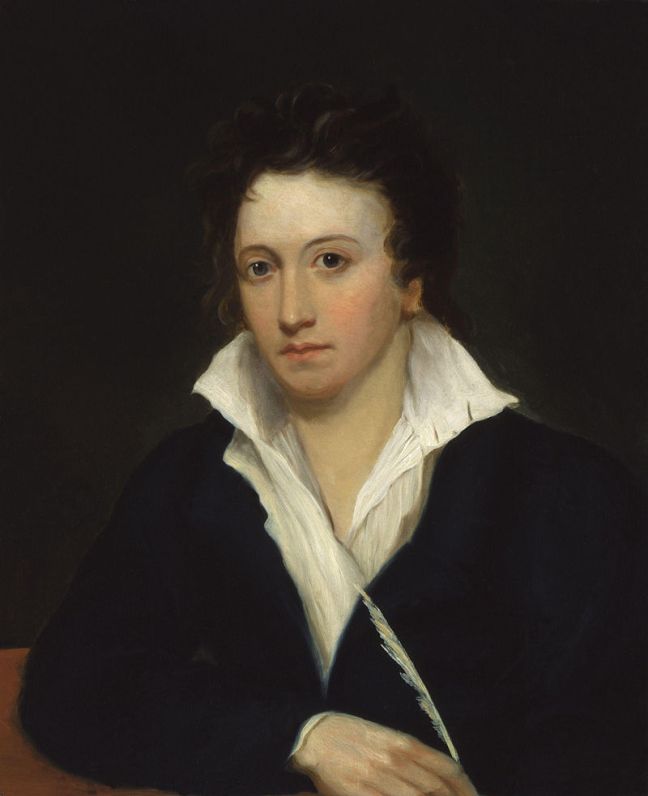
Today is the birthday of Percy Bysshe Shelley. He’d be 324 today, which means he’s been dead nearly ten times as long as he was alive. But that is not the central mystery of this poetic life.

Shelley was one of those souls I describe as “too great to be good.” I concede his literary brilliance and I salute his personal commitments.  He was a vegetarian, committed to social justice, and such a trailblazer in the field of nonviolent resistance that Gandhi credits him as a source. (Gandhi!)

But he was also a Grade-A, Extra-Large jerk. When a romance with a first cousin, Harriet, fell apart, he settled down with a 16-year-old adorer (also named Harriet). Some charitable sources suggest that Shelley married Harriet because he thought he’d die soon and wanted to leave his fortune to someone. Some more critical sources say that he later accused her of marrying him for his money. In any case, about three years into the marriage, Shelley took Mary (nee Godwin/Wollstonecraft), the daughter of his mentor (who became his mentor only after much lobbying and possibly some bribery), and a mere 16 (seems to be a trend), to Switzerland. Harriet was pregnant and Shelley’s stated reason for abandonment was that he needed more intellectual stimulation. One shall have to consult the OED for variant 19th-century meanings of “intellectual.”

About two years down the road, in October of 1816, Harriet’s very pregnant, 21-year-old body was fished out of the river where she had drowned herself. Two months later, Mary’s half-sister, Fanny, despondent over Shelley’s ill treatment of her, killed herself. [Always leaving them wanting more, was our man.] Three weeks after that, Percy and Mary were wed. Some family party that must have been.

At 29, Shelley died when his bespoke sailboat, the Don Juan, sank in mysterious circumstances. [Well, it sank in the sea, but amid mysterious circumstances.] George Gordon, Lord Byron, the King of the Jerks, upon hearing the news reportedly said, “I never knew a man who wasn’t a beast in comparison to him.” So now I understand the Irish.

However, he wrote some nice things. Here are a few:

1. Ozymandias

ozymandias

Shelley wrote this in competition with his friend Horace Smith. I think Horace ought to have won the bet, whatever it was, because Shelley cheated. It’s a sonnet: Where are my octet and sestet? Making up the rules as you go along, eh? Then again, if Byron is to be trusted [NB, Byron is not to be trusted] Smith must have been a beast, so fair play.

And on the pedestal these words appear:
‘My name is Ozymandias, king of kings:
Look on my works, ye Mighty, and despair!’
Nothing beside remains.

Percy, how do you write something like this and still manage to be a jerk? Though not mighty, I do despair.

2. Prometheus Unbound

ShelleyPU

There is a lot of hubbubbery around what gets taught (and what doesn’t) in public schools these days. “Why can’t our kids boil an egg or balance a checkbook?” [You can buy already boiled eggs these days. And what’s a checkbook?] Why does not one get miffed over the lack of the Greek and the Latin? “Why can’t our kids write believable sequels to Aeschylus?” [asked no one ever.] Back the the 19th century, this was all the rage. It was the Pokemon Go of its era. And Shelley did rather a nice job of it. He compares his hero to Milton’s Satan, but better, of course, because he, Shelley, is Milton’s Satan and has rather a surfeit of pride.

Thou art omnipotent. ­‏
O’er all things but thyself I gave thee power…

That sounds like someone we know, doesn’t it? But there are moments, rapturous moments, when you start to see what Byron must have seen:

To love, and bear; to hope till Hope creates
From its own wreck the thing it contemplates…

Oh, Percy! If only your mother had taken the time to raise you properly.

3. The Necessity of Atheism

The_Necessity_of_Atheism_(Shelley)_title_page

No surprises here. Were I Shelley, I would find atheism entirely necessary. Sadly, his theological sensibilities were dull compared to his poetic gifts. He argues eloquently against what he imagines theistic claims to be, but no points for burning the straw man:

“Jesus Christ would hardly have cited, as an example of all that is gentle and beneficent and compassionate, a Being who shall deliberately scheme to inflict on a large portion of the human race tortures indescribably intense and indefinitely protracted; who shall inflict them, too, without any mistake as to the true nature of pain—without any view to future good—merely because it is just.”

One must suppose that the casual threats of a few Oxford dons are behind this misapprehension of soteriology. What is clear to this theist is that God was merciful indeed in allowing Shelley to live in ignorance. His appetites were incompatible with Christianity and not susceptible, it seems, of being curbed. Let us hope mercy’s hand reached out somewhere between the deep blue sea and the devil.

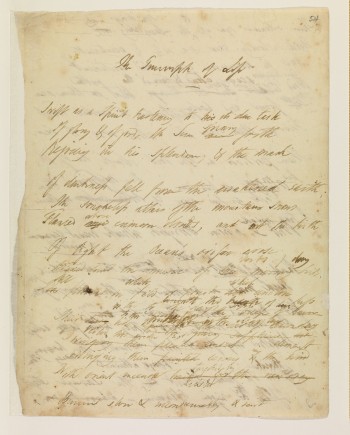
4. The Triumph of Life

The-triumph-of-life

Swift as a spirit hastening to his task
Of glory & of good, the Sun sprang forth
Rejoicing in his splendour, & the mask
Of darkness fell from the awakened Earth.

So begins Shelley’s last, and unfinished work. The lyricism is as gorgeous as Milton’s, the conceit that of Dante. [I’m not sure Rousseau makes the best tour guide of the metaphysical, but there are worse choices.]

Bonaparte, Plato, and Bacon are shown as those who tried different paths in life and all are seen to fail equally. Rousseau tells his own tale and leaves the narrator wondering what it’s all about.

“Then, what is Life?” I said . . . the cripple cast
His eye upon the car which now had rolled
Onward, as if that look must be the last,
And answered …. “Happy those for whom the fold
Of …

Always leaving them wanting more, was our man.

Extra English-major credit: When speaking of Don Juan, the legendary libertine, one pronounces it as one imagines one would. When speaking of the epic satire written by Lord Byron (and which Shelley encouraged him to write), one pronounces it Don JEWan. I’m not entirely sure why, but I think it relates to the British worldview during the colonial era. The same reason the capital of China was moved from Peking to Beijing.

I hope you enjoyed this taste of the delectable and devilish Shelley. Join us again when you find yourself asking, “What should I read next?”


Crime Doesn’t Pay; Neither Does Writing

Dear Reader, today we mark a solemn anniversary. On this day in 1942, William Faulkner, whose works to date (The Sound and the Fury, Light in August, Absalom, Absalom!) were not lucrative enough to keep body and soul knit together, embarked upon his screenwriting career. Yes. This happened.

Humphrey Bogart was the biggest box-office draw of the day and Warner Brothers thought the two would be unstoppable. But consider: Bogart was a chain smoker (hence, the eponymous rude habit of “bogarting” [don’t act like you don’t know what I mean]). How was he ever going to make it to the end of a Faulknerian sentence? In a phrase no one has ever used before: Hemingway to the rescue! WB put Faulkner to work doing film treatments of To Have and Have Not and then Chandler’s The Big Sleep. This was a boon for folks like me, who would otherwise never have endured Faulkner’s work in any form.

Surely, though, this was an aberration. Our society does not hold the written word in so light esteem that we’d make authors work for a living. Right? The sad truth follows:

1. Herman Melville, bank clerk

melvilleWhether he would prefer not to or no, Melville toiled at a bank in Albany, New York, beginning in 1832. Subsequent stints as English teacher and cabin boy proved equally unsatisfactory, so he boarded a merchant ship and went properly to sea. During his five-year voyage, he explored strange new worlds (including living with some cannibals in the Marquesas), sought out new life and new life forms (literally selling sea shells by the seashore in Tahiti), and was boldly imprisoned by mutineers.
Look how happy he is in this photo. Wearing a tie. Sitting in a chair. Having a table at elbow. He has landed the white whale of Indoorland. Well done, Herman.


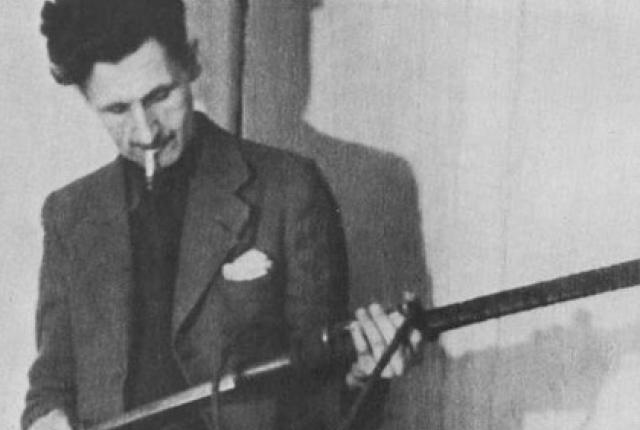
2. George Orwell, policeman

orwell

The man TIME magazine would awkwardly hail as “Big Brother’s Father” one day enlisted (yes, that’s the correct word) in the Imperial Police at the age of 19 and went off to merry Mandalay, where he would be haunted by Mister de Winter’s first wife, Rebecca, (not true) and eventually catch a nice whiff of dengue fever (sadly, true).

Known for perfectly serviceable works such as 1984, Orwell most importantly crafted the definitive guide on the making of tea, lauded (properly) as among the mainstays of civilization. He was also a linguist and spoke 9 languages, including the Tibeto-Burman tonal language, Shaw-Karen.

So cruel was life to this man that he retreated to an abandoned building in the Inner Hebrides after the death of his wife (and after many unsuccessful attempts to replace her). Fortunately, he eventually contracted tuberculosis, which was extremely fashionable at the time. Do it to Julia, indeed.

In this photo, he is doubtless wondering why he was not posted to Japan, where he might have picked up the proper technique for hara-kiri.

3. Kurt Vonnegut, car salesman

GERMANY KURT VONNEGUT

Did you really think these would get better? No Disney ads on this blog, Friend. (Dear Mr. Iger, I can make you a competitive offer.)

Kurt Vonnegut opened (not just sauntered into one Saturday morning, but opened) a Saab dealership in Barnstable, Massachusetts, five years after his first novel, Player Piano, was launched. He credited his lack of success at selling Saabs with the prejudice the Swedes displayed in withholding the Nobel.

This is a photo of Kurt visiting the air-raid shelter where he waited out the fire-bombing of Dresden as a POW, trying mightily to catch a little of Orwell’s complaint.

4. J.D. Salinger, your activities director

salinger

Nobody’s fool, J.D. tried to go about things the right way. But when his relationship with Oona O’Neill (daughter of Eugene O’Neill) went south, he had to get an honest job. I’m not sure he had to go whole hog and become the activities director for the MS Kungsholm, but it was a Swedish ship (seems he and Kurt were working the same angle).

Hard to imagine this fellow setting up the shuffleboard tourney. I’m seeing swaths of rye around the courts. And then, then, ohmygosh, people are just running off the edge of the ship! And no one can catch them, because J.D. has been so busy with the pinochle seatings that Holden Caulfield hasn’t been written yet. The horror!

There are more, many more: Agatha Christie as druggist’s assistant, James Joyce running a movie theater, Kerouac washing dishes and Burroughs killing bugs. Virginia Woolf may have had it worst of all. She became a publisher and it made her so cranky she rejected James Joyce. Not a date with Joyce, mind you, but Ulysses. She sold out eventually and killed herself three years later. Dangerous work, this writing life.

So, next time you breezily bypass some Great Work and think, “I’ll get it at the library,” remember: You are a party to this grave injustice. Writing is hard and writers need to eat—dust and cocaine, at a minimum. Go treat yourself, some lucky author, and the world and support your local bookstore (or massive online retailer).

The weekend’s coming. What will you read?


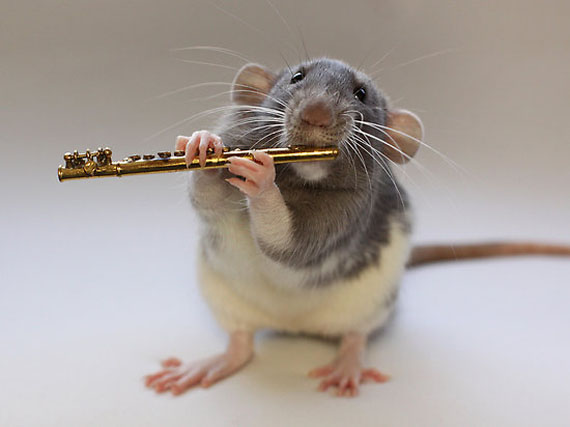
Rats!

July 22nd is International Ratcatchers’ Day. I didn’t even know there were international rats. Ah! The learning never ends when books are involved. “The Pied Piper of Hamelin” is the obvious choice, but we decry the obvious. Let’s find some more reclusive rodents.

1. The Wind in the Willows

willows

There is, apparently, no shortage of people who will argue that Rat (aka “Ratty”) is not a rat. I say to them both P and shaw.

Kenneth Grahame‘s motley crew of vermin is so wonderfully British and polite and concerned for one another that our future robot overlords will be able to recreate the best of our civilization from reading this tale.

There is a weird story surrounding the publication of the novel which asserts that it had been rejected by a number of publishers until a certain Theodore Roosevelt made a plea on the author’s behalf. I can’t find a reputable source for this and it seems wildly improbable. Yes, there was Teddy’s thing with the national parks and the Great Outdoors in general, but there were also the Rough Riders. What happened to him on San Juan Hill?

2. King Rat

kingrat

James Clavell was a POW in a Japanese camp for three years. Before his breakout hit Shogun, he debuted with this tale of survival in the camp. My father was a WWII vet of the Pacific theater and he told few tales, but one grew up with the distinct impression that few fates were worse than finding yourself at the mercy of the Japanese.

Clavell tells lots of tales. Most historical accounts paint his prison, Changi, as among the better run. The survival rate was significantly better than average; most camps had a 27% mortality rate. Some of this was due to the, let’s say pluck, of the prisoners, who caught and bred rats as livestock. Clavell tells the story of what happened when the camp was liberated and the soft-hearted detainees freed the rats from their cages, but I won’t spoil his revelation for you. I will spoil the bare facts of it though, because there is a lovely cinematic treatment of it featuring Javier Bardem teasing an oh-so-calm Daniel Craig in Skyfall.  If you’d prefer to see to the stark movie version of King Rat, it’s up on YouTube in its entirety. But Daniel Craig is not in it, so…

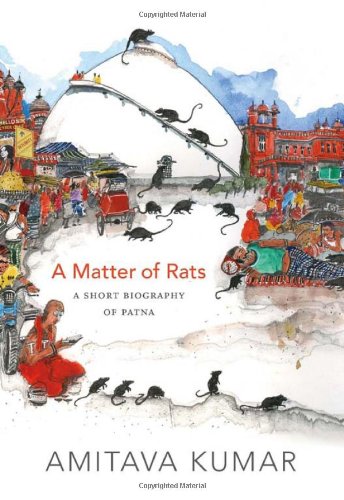
3. A Matter of Rats

matter ratsI have tried so many times to dig into India. The British loved it. They have all that tea. Gandhi and Mother Teresa are great. I could even learn to like the Nehru jacket. But I have failed to get into:

  • Midnight’s Children
  • The God of Small Things
  • White Tiger
  • The Inheritance of Loss
  • The Interpreter of Maladies

I think each of the authors for these books is brilliant. The writing is enchanting. But India is just so different, in ways I can’t even articulate, that it’s hard to break into their reality bubble.

The same is true of Amitava Kumar‘s portrait of a hometown. It’s a skillfully crafted biography of place (I love that sort of thing). If you like any of the authors of the above works (and you must like at least one), you will probably love this. There is one tangent I found intriguing about the East India’s use of Patna to produce the opium they were using to hornswoggle the Chinese. [Marginalia: How is capitalism still legal?] Of all my efforts to conquer India, this vehicle came closest to carrying me to victory. Really, very close. Just not quite there. But this book does have rats—truly amazing numbers of rats. Don’t take this one camping with you.

You will have noted, I hope, the restraint I have applied in resisting the easy jump to mice. Mice are virtually everywhere in literature, and I don’t mean just in my overstock shelves in the basement. I’m sure there is some sort of mouse day (when is Mickey’s birthday, anyway) and we’ll do our due diligence then. Here’s hoping all your smelled rats are metaphorical.


Junk Squad

Today, the rest of the world celebrates Junk Food Day (I’m not sure if there is a day when this is not celebrated, but I tangentialize). I thought of recommending all the yummy finger food you can mindlessly consume while paging through your latest, but the pitfalls were deep and many: the meltitude of bonbons, the Trumpian stains of Cheetos, the venerable leavings of cheese and crackers, and the risk of wine stains that lend too-authentic a cast to your favorite mystery.

Instead, I offer you junk as the main course: Books which are “junk” by some reasonable standard, but that I still managed to read and even (in some cases) enjoy.

1. Twilight

twilight

Shame me if you will, but I read this. And every one of its sequels. And I watched the movies at their premier-night midnight showings. My Meyer game is strong and, if you must know, Team Edward, of course.

It started as a responsible-parenting episode. I had a teen daughter, she was obsessively reading this, yada. But what red-blooded American girl can resist the charm of an immortal, chaste Edwardian with R.Pat’s looks and a century of practicing Debussy under his belt? None, I assert.

I won’t defend the writing, and many make a strong case about how this codependent mess of a relationship is the worst possible thing for teen girls to read. But the idea that someone would wait a hundred years for you? Game, set, match Meyer.


2. The Shack

shack

I can say one nice thing about this book: They nearly got the title right. In that it should start with an “SH,” have one syllable, and a short vowel, and give one a sense of purgation upon utterance.

Twenty million people bought this (No, there’s no link. I will not be a party to this.) That’s roughly the equivalent of those killed by Stalin. I’m not sure whom I pity more.

The writing contravenes the Geneva Convention, the plot is a slo-mo reel of the Hindenburg disaster, and the theology is an abomination unto the Lord.

Eugene Peterson blurbed it and, as a result, I am going to burn the one Eugene Peterson book I own (relax, it’s not the Bible).


We don’t have a rating system here at Bibliophenia, but if we did, this one would get five of these:mines

If you haven’t yet forked over your money for this one, go buy yourself six McDoubles and be the better for it.

3. Atlas Shrugged

atlas

Oh, it’s horrible. But I did read it. Twice.

Here’s the thing: If you ever feel as though you just can’t make a difference in the world, as though you have no control over your own life, as though there is no evidence of free will in your sphere of influence, Atlas Shrugged is the one and only antidote.

Have yourself a big, cold drink of Dagny Taggart. It’s like Red Bull for your soul—powerful, instantly effective, and possibly the source of long-term damage. You will be sure that your world is YOUR WORLD. You will own it. You will be all powerful. You will be an unmitigated jerk.

After about three weeks of ceaseless dominance over your life, you’ll regain your senses, recognize that other humans are not mere props in your solipsistic one-man show, and settle back down to normality. But your closets will still be super clean and your boss will have already decided to give you a raise.

[Extra credit: The “Ayn” in Ayn Rand is properly pronounced like the German word for one: Ein. Or like the first syllable in Einstein. Or like the sound you make when hit your knee on a table whilst standing up. Or that bit that Ozzy sings in the intro to “Crazy Train.” If you forget and some fanboy gives you a hard time, remind him that her real name is Alice Rosenbaum and that she’s a Russkie. That usually throws some cold water on misplaced fervor.]

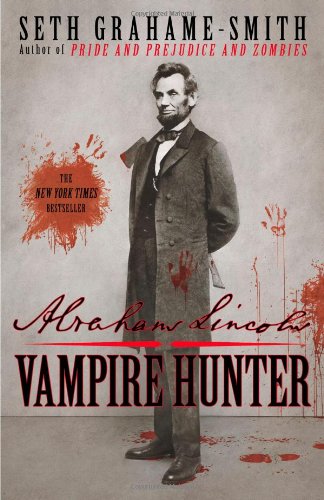
4. Abraham Lincoln, Vampire Hunter

lincolnI had a new Kindle. This was a 99-cent promo. I was on vacation. There was nothing else to read.

I loved it.

Bonus: I loved my new Kindle, because no one could see what I was reading.

This is a well-written, tightly plotted novel that explains Lincoln in a way that Doris Kearns Goodwin cannot. Here’s a wee taste:

Abraham Lincoln would never take another life. And yet he would become one of the greatest killers of the nineteenth century.

The deliciousness does not stop. Need a break? Get yourself one of these.


And that, my friends, is our tour of junk food for the mind—some of it dangerous, some OK in moderation. I hope that you will try one, especially when you are feeling rebellious, but dare not rebel against reading. What will you read next?